Matomo vs Pirsch: Reporting, Hosting and Cost in 2026
Compare Matomo and Pirsch by reporting needs, hosting requirements, setup effort and total cost, with a practical decision matrix for marketing teams.

TL;DR
Favor Matomo when broader analytics capabilities support recurring marketing decisions; consider Pirsch when simpler reporting covers the required questions. Compare hosting requirements, configuration work and total cost before selecting either platform.
Matomo vs Pirsch is a workflow decision, not just a dashboard comparison. Marketing teams should start with the decisions their analytics must support, then evaluate reporting depth, hosting and operating cost. Faurya provides related comparison guides for teams building a shortlist.
Analytics fit: The match between a platform's reporting capabilities, operational requirements and a team's actual measurement needs.
Table of Contents
Matomo vs Pirsch: Reporting Fit
Matomo's broader feature set is justified when additional analysis changes business decisions; simpler reporting is sufficient when a small set of metrics answers the team's recurring questions. The useful distinction is decision coverage, rather than the number of dashboard features.
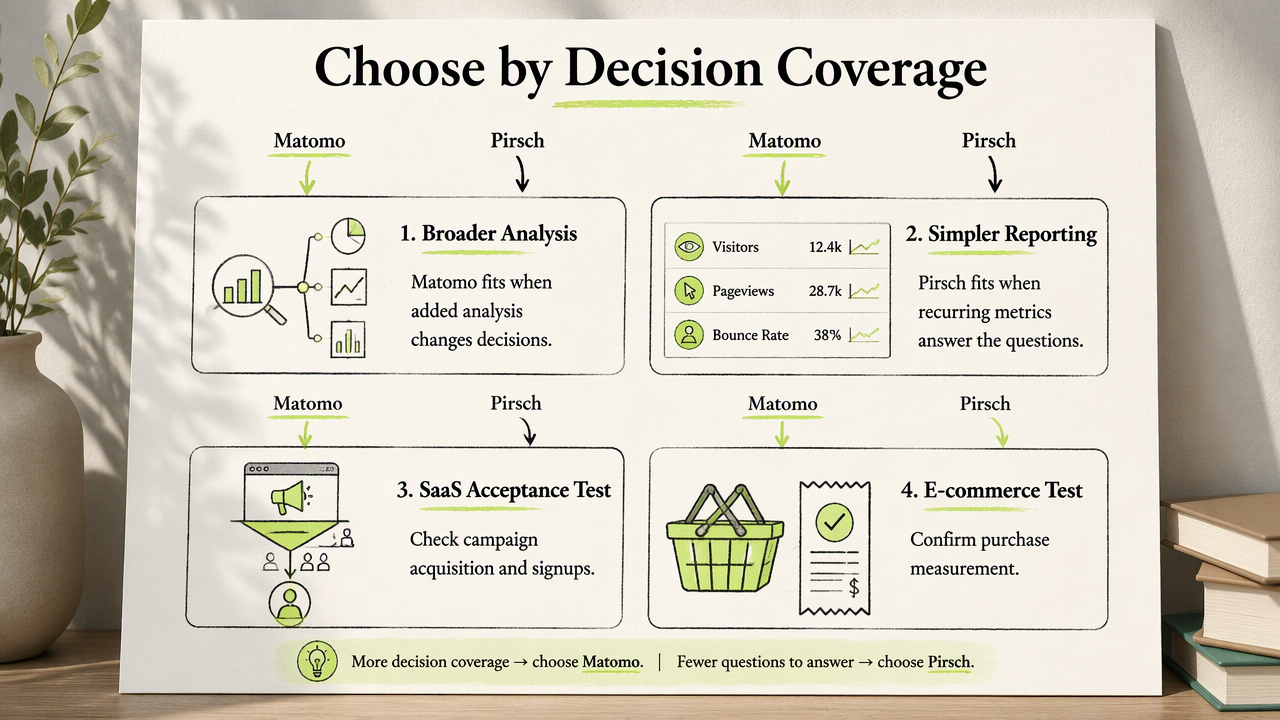
A SaaS team, for example, can test both candidates against campaign acquisition and signup measurement. An e-commerce team can use purchase measurement as its acceptance test.
Decision Matrix for Marketing Teams
| Decision factor | Matomo | Pirsch |
|---|---|---|
| Reporting priority | Evaluate for broader analysis | Evaluate for simpler reporting |
| Team workflow | Best considered when depth matters | Best considered when clarity matters |
| Acceptance test | Demonstrate required analysis | Demonstrate required metrics |
For another focused comparison, the Pirsch versus Plausible guide helps extend the shortlist without changing the evaluation criteria.
Hosting, Configuration and Total Cost
Hosting, configuration and total cost should be assessed separately from reporting depth because operational requirements vary between deployments. For a 2026 purchase, current vendor documentation and plan terms should determine the final comparison; the supplied research doesn't establish verified pricing or hosting entitlements.
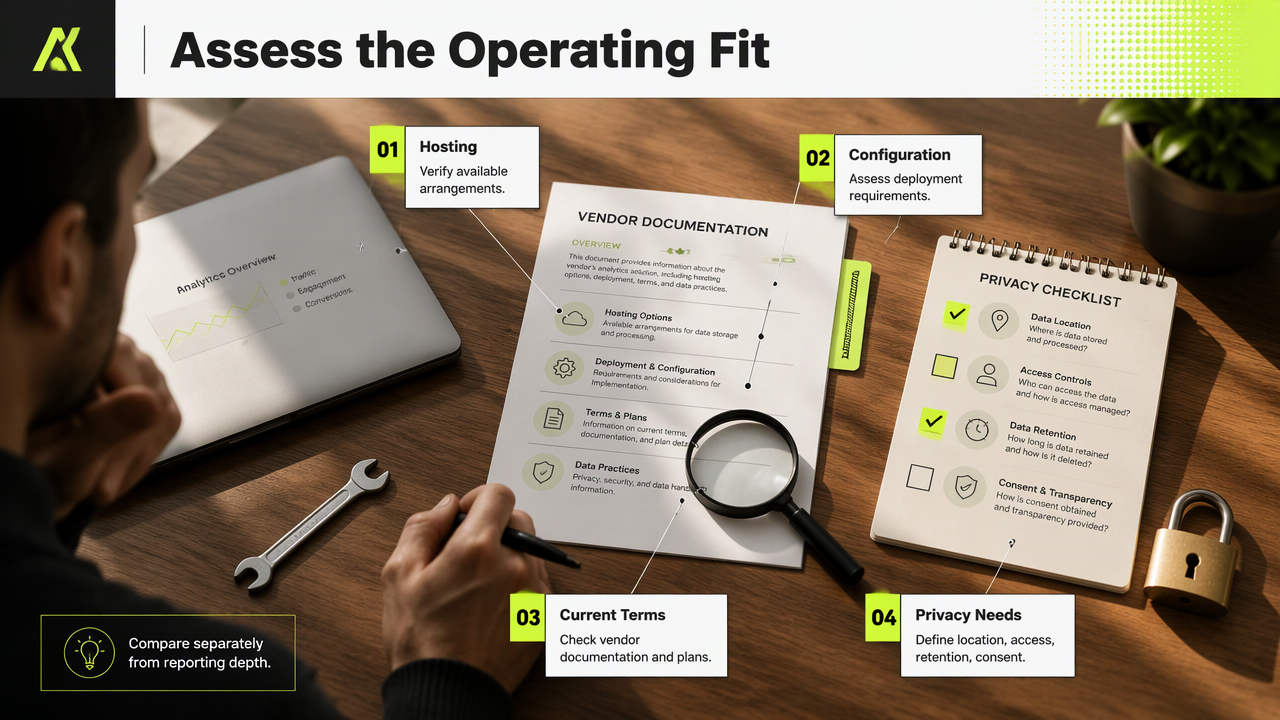
Privacy-conscious owners should define data location, access, retention and consent requirements before selecting a deployment. A privacy-focused label alone doesn't establish suitability for a particular website.
A Practical Procurement Checklist
- Confirm available hosting arrangements and responsibility for maintenance.
- Test installation, campaign tagging and required conversion measurement.
- Record subscription, infrastructure, add-on and staff costs where applicable.
- Check contractual and technical privacy requirements.
Compare the cost of producing a trusted report, not merely the advertised subscription.
The Matomo alternatives guide for startups offers a related starting point for a wider evaluation.
Selection FAQ: Who Should Pick Which?
Selection should follow a documented reporting test, with ownership and purchasing requirements agreed before commitment.
When Should a Team Choose Matomo?
Matomo is the stronger candidate when its broader feature set supports analysis the team will actually perform. Buyers should identify recurring questions, assign an analyst or owner, and demonstrate the required reports during evaluation. Extra capabilities earn their place when they influence campaign, product or revenue decisions.
When Is Pirsch's Simpler Approach Sufficient?
Pirsch deserves consideration when simpler reporting answers the agreed measurement questions without requiring broader analysis. A small team should test routine acquisition and conversion reporting first, then assess readability and upkeep. The Fathom versus Pirsch comparison provides another relevant comparison for this shortlist.
Does a Privacy-Focused Tool Remove Compliance Work?
A privacy-focused tool doesn't remove the need to assess the website's implementation and legal obligations. Buyers should check actual data collection, consent settings, retention and vendor terms against their requirements. Neither a brand name nor a simplified dashboard can establish compliance for every deployment or jurisdiction.
Conclusion
The next step is a short evaluation using identical reporting tasks and a written cost checklist. Related guides on faurya.com can support that process. Explore Faurya, shortlist the relevant options, and choose the platform that demonstrates the required reports under acceptable operating conditions.
Generated by EarlySEO.com
Looking for a free website analytics tool? Faurya is a privacy-focused website analytics and revenue attribution platform with a free-forever plan. Get 50,000 free events every month, with no credit card required. Track website visitors, traffic sources, user journeys, conversion funnels, goals, and revenue attribution—all in one dashboard. Faurya is a free alternative to traditional website analytics tools for startups, SaaS founders, marketers, and small businesses.