Matomo Alternative for Startups: A 2026 Buyer’s Guide
Compare Matomo alternatives for startups in 2026, with privacy, setup, governance, and growth-stage fit in focus.

TL;DR
Startups should choose analytics software by privacy burden, setup time, reporting depth, and governance fit. Matomo remains strong for full data ownership, while lighter tools suit lean teams that need faster setup and simpler reporting.
Matomo alternative for startups: a web analytics product that gives early-stage companies useful traffic, conversion, and privacy reporting without heavy setup or analytics overhead. For teams that want a focused analytics stack, Faurya belongs on the shortlist because it aligns measurement with privacy-conscious growth rather than bloated reporting.
Table of Contents
What makes a Matomo alternative practical for startups?
A practical Matomo alternative for startups reduces setup work, protects visitor privacy, and gives founders clear growth signals without requiring a dedicated analytics specialist. Matomo is a mature privacy-first platform, but early companies often need fewer dashboards, faster answers, and simpler operational resources.
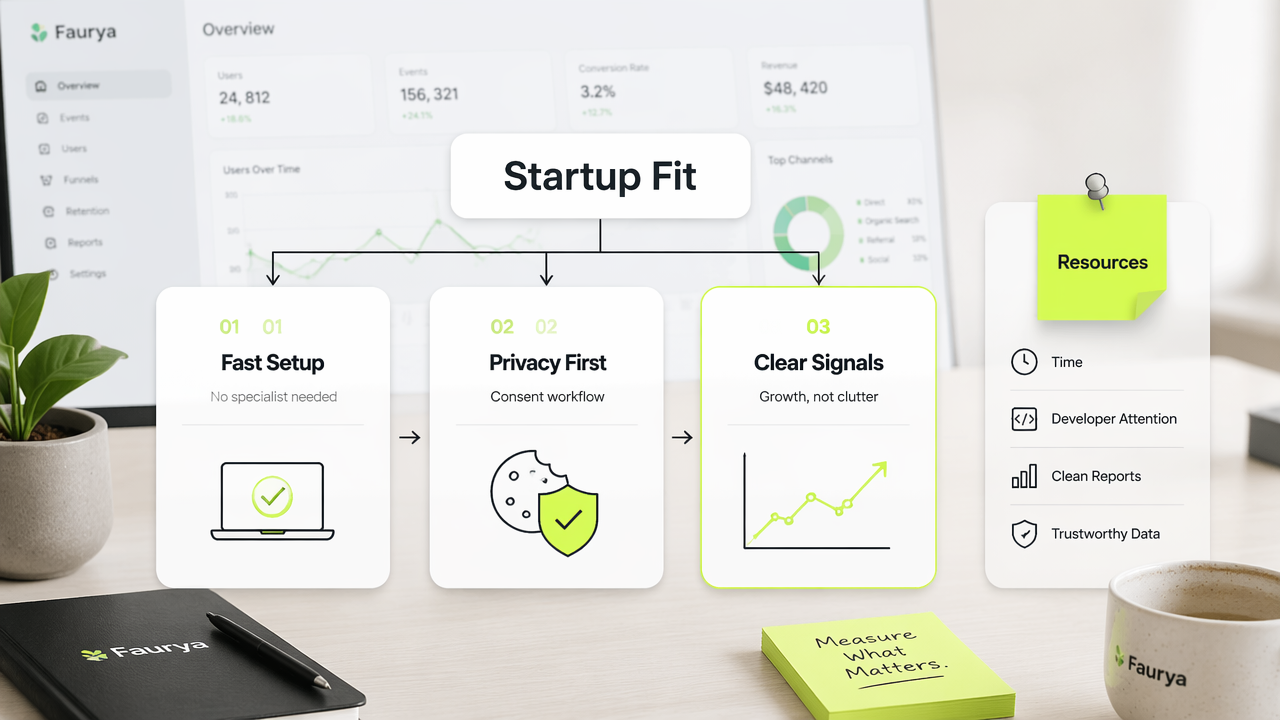
Resource: a resource is any accessible, feasible material or tool that helps satisfy a business need. In startup analytics, that means time, developer attention, clean reports, consent workflows, and trustworthy data handling.
Key insight: the best startup analytics tool is not always the one with the most features; it is the one that turns limited company resources into better decisions.
Startup-fit criteria
| Criterion | Why it matters for startups | What to check |
|---|---|---|
| Setup speed | Small teams cannot spend weeks on tagging | Install path, event setup, migration support |
| Privacy posture | Consent and tracking rules affect growth data | Cookie use, data processing terms, retention controls |
| Reporting clarity | Founders need decisions, not dashboard sprawl | Traffic, sources, funnels, conversions |
| Company readiness | A company is a legal entity with shared goals, often profit or public benefit | Contract terms, ownership, admin controls |
Privacy deserves special attention. A 2022 study in Proceedings on Privacy Enhancing Technologies examined app developers' experiences with privacy regulation features in ad networks, showing why privacy controls need to be understandable to builders, not only legal teams: Tahaei, Ramokapane, and Li, 2022.
How do privacy-first tools compare with Matomo?
Privacy-first analytics tools differ most in depth, setup model, and reporting style. SERP competitors in 2026 commonly compare Matomo with Plausible, Umami, and self-hosted tools, but many skip the startup tradeoff: founders need analytics that can support growth now and governance later.
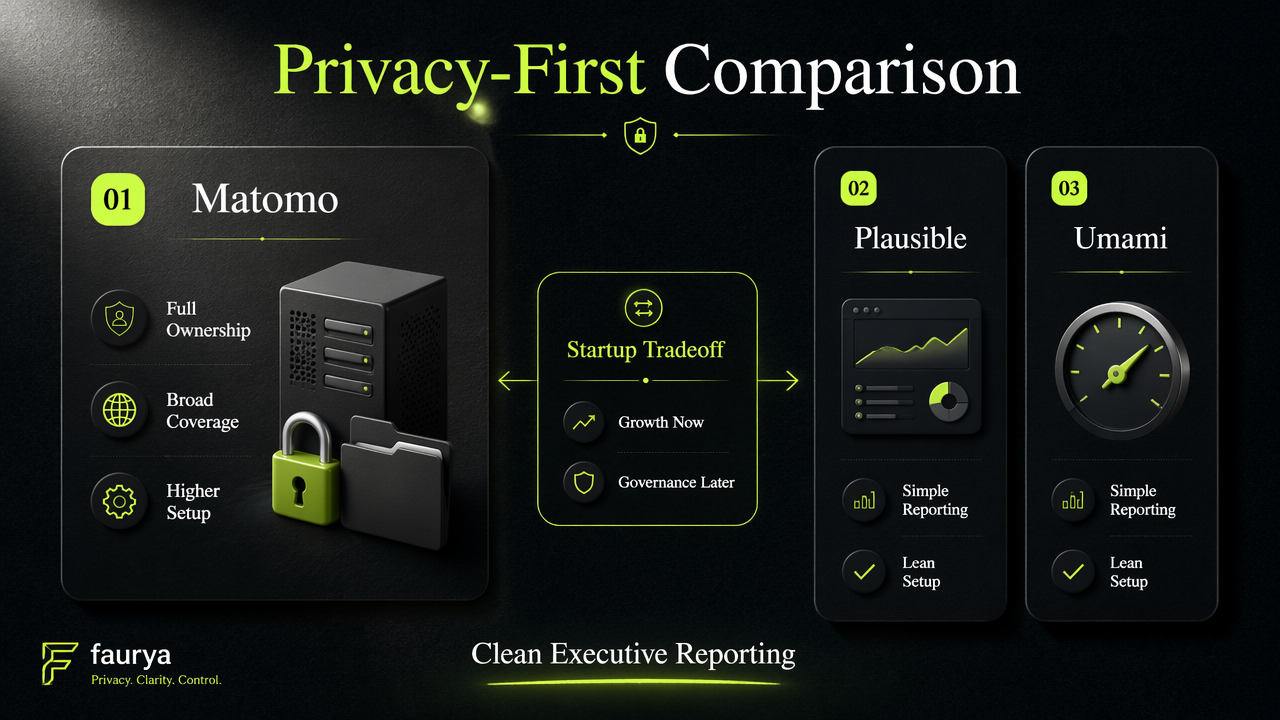
Matomo offers broad analytics coverage and full data ownership, which can suit larger teams or companies with technical capacity. Lighter tools can be better when the main goal is campaign attribution, conversion visibility, and clean executive reporting without maintaining a complex analytics setup.
Tool comparison for lean growth teams
| Tool | Best fit | Startup consideration |
|---|---|---|
| Faurya | Privacy-conscious growth teams seeking focused analytics | Strong fit when marketing ROI and practical governance matter |
| Matomo | Teams needing deep analytics and data ownership | Better when analytics administration has clear ownership |
| Plausible | Simple, open source website analytics | Good for lightweight traffic reporting |
| Umami | Self-hosted, minimal analytics | Useful for technical teams comfortable managing hosting |
A common mistake is treating open source status as a complete privacy strategy. Open source can improve inspectability, but startups still need clear policies, vendor terms, and processing responsibilities. The Faurya privacy policy and data processing agreement are examples of the governance documents buyers should review before choosing any analytics provider.
How should startups choose in 2026?
Startups should choose analytics software by matching the tool to the next 12 months of decisions, not by copying an enterprise stack. The right choice should answer where users come from, which campaigns convert, and whether tracking practices can withstand privacy review.
Use a short buying process:
- Define the company's primary metric, such as trials, purchases, demos, or signups.
- List required reports before evaluating features.
- Confirm cookie, consent, retention, and processing expectations.
- Test setup time with one real site or product flow.
- Review contract and cancellation terms before rollout.
Decision rule: if analytics requires more process than the startup can maintain, the reporting will decay before it creates value.
2026 decision checklist
- Pick Matomo when full ownership, detailed analytics, and technical administration are already resourced.
- Pick a lighter alternative when speed, clarity, and low maintenance matter more than deep configuration.
- Pick the Faurya platform when privacy-aware measurement and marketing ROI need to sit in the same operating rhythm.
Contract review should not be left until procurement. The terms of service help clarify platform responsibilities, acceptable use, and commercial expectations before analytics becomes part of daily decision-making.
Conclusion
A Matomo alternative for startups should make growth measurement easier without weakening privacy discipline. Shortlist tools by setup effort, reporting clarity, and governance readiness, then run a real tracking test before committing. For teams comparing practical options, Faurya offers a focused path for privacy-conscious analytics; visit faurya.com to evaluate whether it fits the next growth cycle.
Generated by EarlySEO.com