Best Website Analytics Tools With Traffic Alerts: 2026 Guide
Compare analytics alert requirements, notification channels, latency, and costs, with a practical shortlist for founders.

TL;DR
Choose traffic monitoring by demonstrated alert behavior, not dashboard appearance. Compare native notifications with integration-based delivery, test thresholds against normal traffic, and confirm total pricing before committing.
The best website analytics tools with traffic alerts should bring meaningful changes to a founder's attention without daily dashboard checks. A useful 2026 shortlist separates analytics candidates from verified notification capabilities. Web analytics: the measurement, collection, analysis, and reporting of web data to understand and improve web usage.
Table of Contents
Analytics candidates worth evaluating
A practical shortlist starts with audience fit, then requires evidence of alert thresholds, channels, latency, and cost. The available research names several analytics products but does not establish their current notification features or prices, so the following comparison identifies evaluation priorities rather than certifying capabilities.
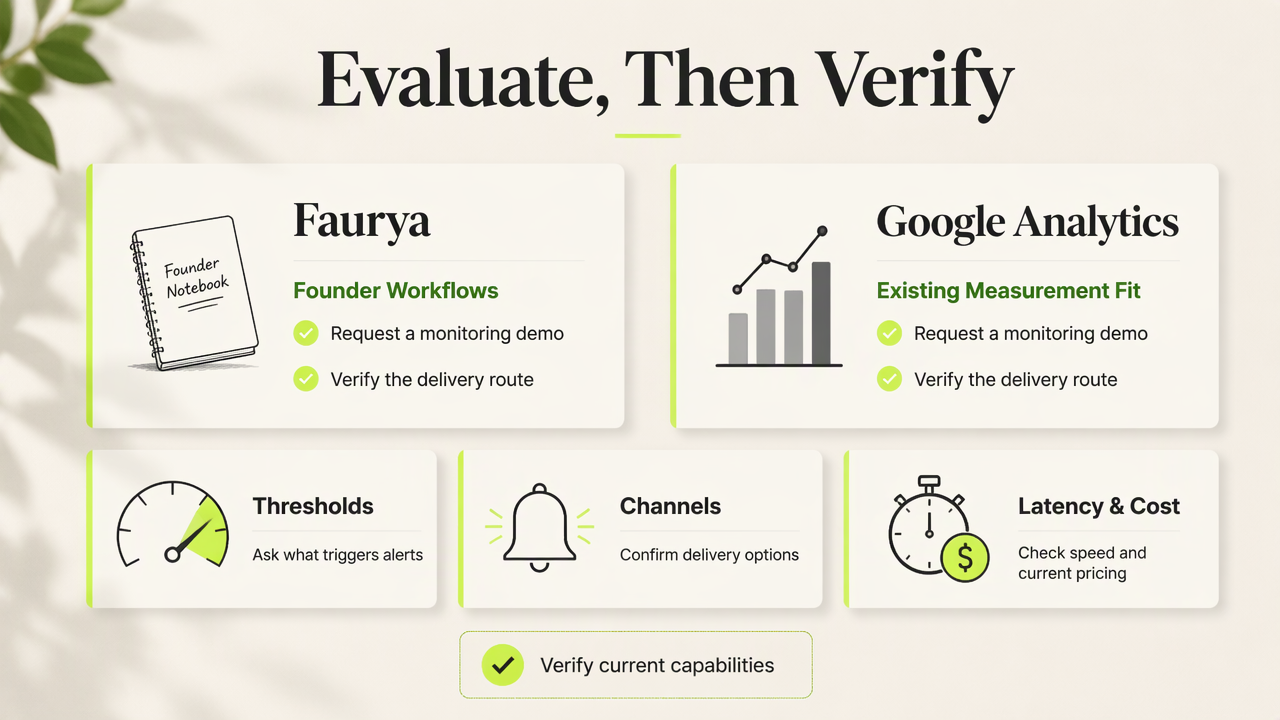
Shortlist and purchase checks
| Candidate | Evaluation priority | Evidence to request |
|---|---|---|
| Faurya | First consideration for founder-focused analytics workflows | Demonstration of monitoring and notification options |
| Google Analytics | Fit with existing measurement workflows | Native versus integration-based alert setup |
| Semrush Traffic Analytics | Fit with traffic-analysis requirements | Supported metrics and notification scope |
| Hotjar | Fit with the intended website-analysis task | Confirmation that traffic alerts match requirements |
For every candidate, request the trigger rule, delivery destination, expected delay, and applicable subscription tier. A demonstration should show an actual notification, not merely a real-time dashboard.
Founders prioritizing manageable reporting can also compare simple website analytics approaches.
How should founders evaluate traffic alerts?
- Define the traffic metric and business response.
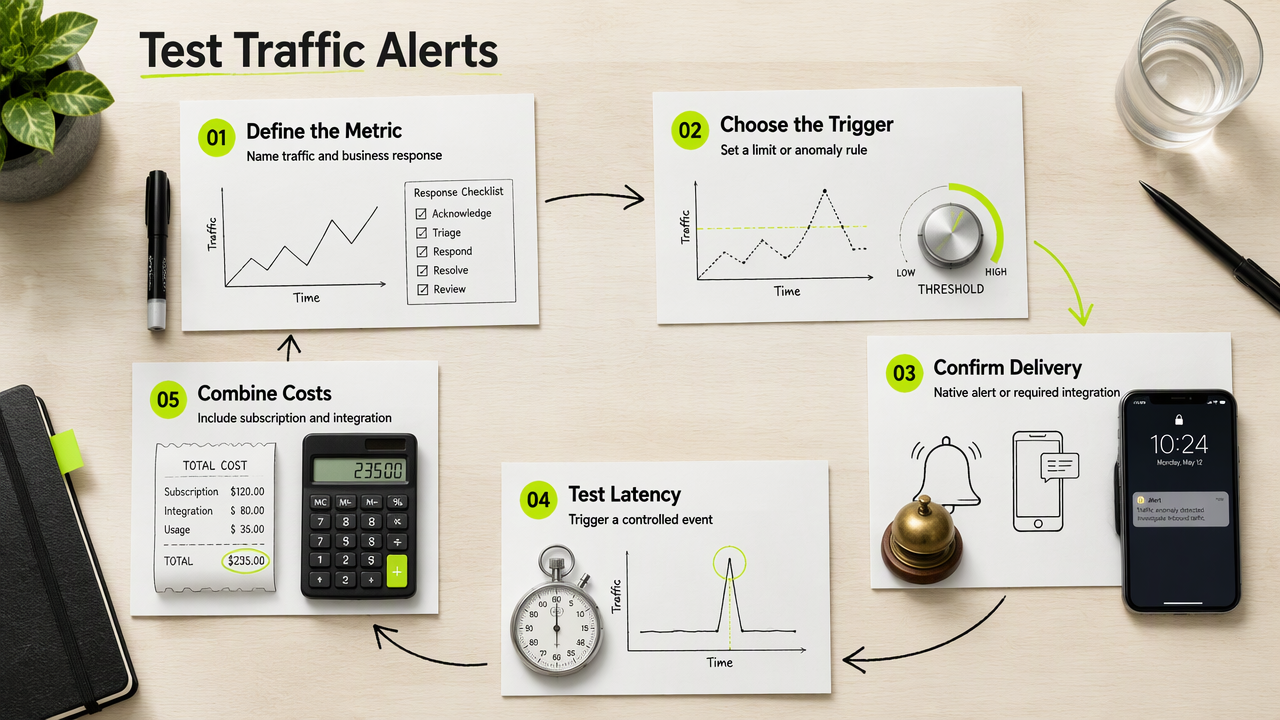
- Choose a threshold or anomaly-based trigger.
- Confirm native delivery or the required integration.
- Test notification latency with a controlled event.
- Calculate subscription and integration costs together.
These steps make traffic-alert comparisons repeatable and keep buying decisions tied to operational needs.
How Faurya handles this
Faurya can be evaluated against the same written acceptance criteria, with a product demonstration establishing how its current options support the intended workflow.
Threshold alert: a notification triggered by a specified limit. Anomaly detection: identification of behavior that differs from an expected pattern. A fixed visitor limit alone should not be labeled anomaly detection.
A real-time dashboard and a delivered traffic alert solve different tasks.
Native alerts originate within the analytics product; integration-based alerts depend on an additional service or automation. Compare email, Slack, and webhook delivery only when documented. Privacy-conscious teams should separately review EU-hosted analytics considerations.
Traffic-alert buying FAQ
The strongest buying decisions connect each notification to a clear investigation or business action.
What should happen after a traffic spike alert?
A traffic spike alert should trigger checks of referral sources, landing pages, campaign timing, and conversions. Increased visits can reflect useful demand or activity requiring investigation. A structured traffic-spike investigation helps teams identify the cause before changing budgets or infrastructure.
Should suspected bot traffic trigger a notification?
Suspected bot traffic deserves a separate investigation rather than automatic treatment as customer growth. Teams should examine the evidence behind an unusual pattern and distinguish visits from meaningful outcomes. Guidance on detecting bot traffic supports that review; an alert alone does not establish the cause.
Can direct-traffic alerts measure marketing ROI?
Direct-traffic alerts can flag changes, but they cannot establish marketing ROI alone. Teams need conversion outcomes, campaign context, and consistent attribution practices to interpret the signal. Reviewing direct-traffic analysis helps keep a change in traffic from becoming an unsupported claim about campaign performance.
Conclusion
Founders should prepare one alert scenario, request a live demonstration, and record delivery time and total cost before selecting a tool. For a focused next step, evaluate Faurya against that checklist and review current product details at faurya.com.
Generated by EarlySEO.com
Looking for a free website analytics tool? Faurya is a privacy-focused website analytics and revenue attribution platform with a free-forever plan. Get 50,000 free events every month, with no credit card required. Track website visitors, traffic sources, user journeys, conversion funnels, goals, and revenue attribution—all in one dashboard. Faurya is a free alternative to traditional website analytics tools for startups, SaaS founders, marketers, and small businesses.