Pirsch vs Umami: Hosting, Tracking, and Cost Decisions
Compare analytics hosting, event tracking, reporting, and ownership costs with a practical checklist for evaluating Pirsch and Umami.

TL;DR
Choose managed analytics when operational convenience matters most; consider self-hosting when infrastructure control justifies ongoing maintenance. Confirm Pirsch and Umami's current deployment options, reporting features, and pricing before selecting either product.
The decisive question in Pirsch vs Umami is who should operate the analytics infrastructure. For a 2026 purchase, hosting, useful reports, and total ownership cost deserve more attention than headline pricing. Managed analytics: a deployment model in which a provider operates the service rather than the customer.
Table of Contents
Hosting Choice: Convenience or Infrastructure Control
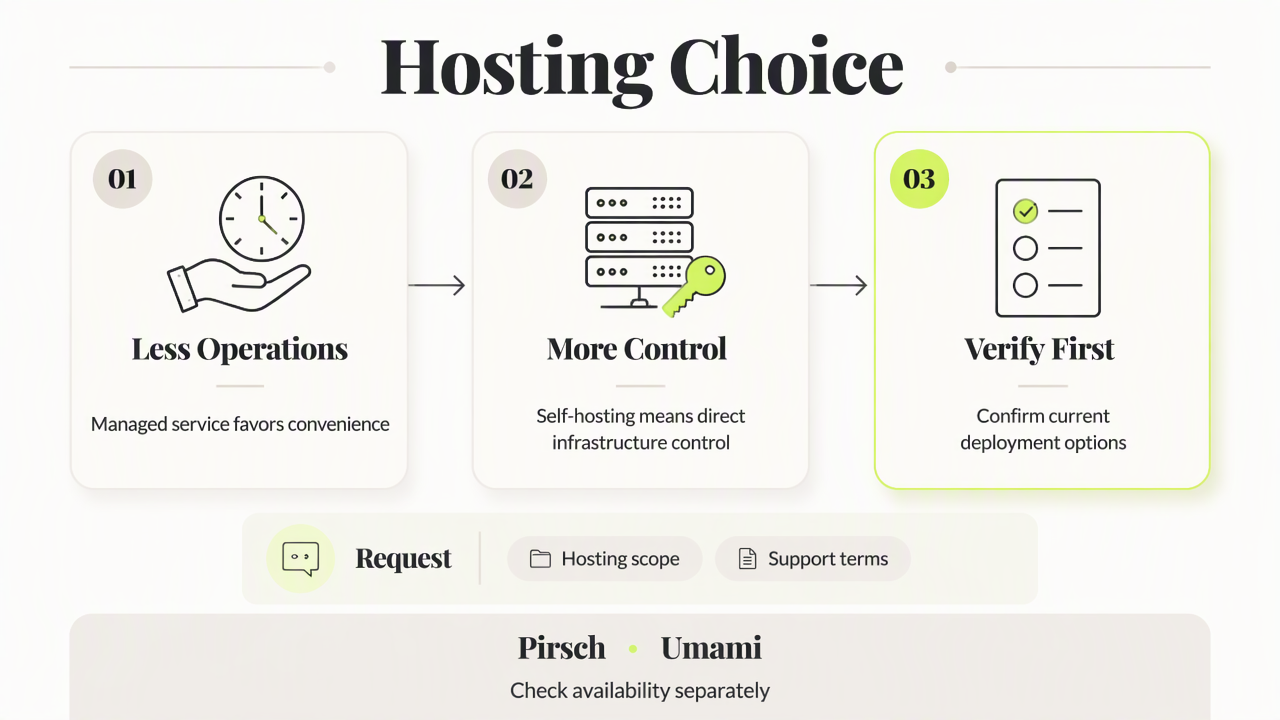
Managed hosting favors operational convenience, while self-hosting favors direct infrastructure control. The supplied research concerns the food-related meaning of umami, not verified analytics documentation, so it cannot establish either product's current hosting options or support a definitive winner.
Recommendation Table by Team Priority
Deployment recommendations should follow the team's operating requirements, with product availability verified separately.
| Team priority | Preferred model | Evidence to request |
|---|---|---|
| Minimal infrastructure work | Managed service | Hosting scope and support terms |
| Direct infrastructure control | Self-hosted deployment | Installation and upgrade documentation |
| Small team with technical capacity | Either, after costing | Subscription and maintenance estimates |
Self-hosted analytics: software operated on infrastructure controlled by the customer.
For Pirsch and Umami, buyers should confirm which deployment models are currently offered, where data resides, and who handles upgrades. A privacy-conscious team should also examine retention settings and access controls rather than treating a hosting label as proof of compliance.
Choose the operating model first; compare products within that model second.
Event Tracking, Reporting, and Ownership Costs
The stronger analytics choice is the product that answers the team's business questions at an acceptable total cost. Feature names alone don't establish reporting usefulness; a trial should reproduce an actual acquisition-to-conversion workflow before a purchase decision.
A Repeatable Evaluation Checklist
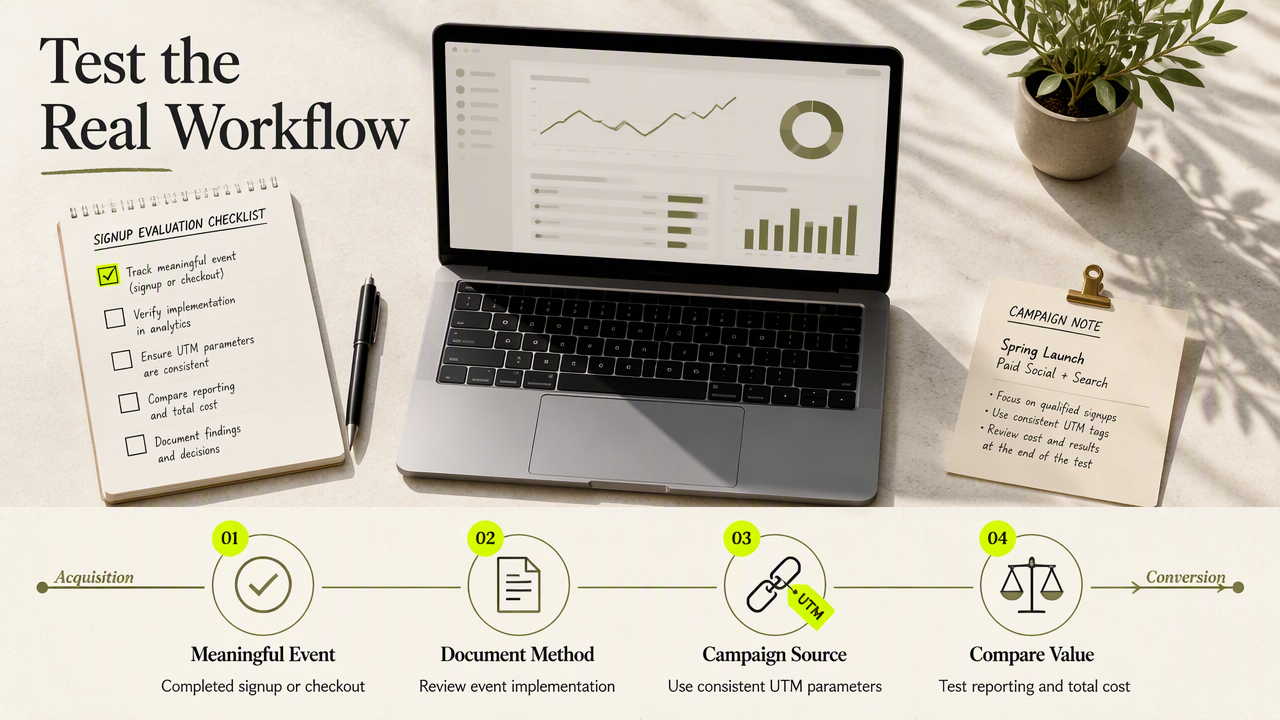
A controlled test makes event tracking and reporting easier to compare without relying on unsupported feature claims.
- Define a meaningful event, such as a completed signup or checkout.
- Check each product's documented event implementation method.
- Test campaign attribution using consistent
UTMparameters. - Confirm that reports answer the selected conversion question.
- Record subscription charges, hosting expenses, and maintenance time.
For example, a SaaS founder can test whether a campaign visit and completed signup appear in the required report. An e-commerce operator can instead examine purchase completion. These are evaluation scenarios, not claims that either tool supports a particular report.
Pricing comparisons should use current plan limits, billing units, and expected traffic. Self-hosting calculations should include backups, monitoring, and upgrade work where applicable.
A documented requirements sheet gives every candidate the same evaluation criteria. Faurya can be included in that consideration process, with its suitability assessed against the same evidence.
FAQ: Evidence Needed Before Choosing
A final recommendation requires current product documentation and a representative trial.
Which product should a small SaaS team choose?
A small SaaS team should favor the option that meets its reporting requirements with an operating workload it can sustain. The supplied research doesn't verify enough product details to name Pirsch or Umami as the winner. A short trial and current hosting documentation should determine the shortlist.
Is self-hosting always cheaper than managed analytics?
Self-hosting isn't automatically cheaper because subscription savings are only one part of ownership cost. Infrastructure, backups, monitoring, and staff time also belong in the calculation. Teams should compare both options over the same period and traffic assumptions, rather than comparing a software price with a managed-service bill.
Does hosting choice establish privacy compliance?
Hosting choice alone doesn't establish privacy compliance. Teams should assess actual data collection, retention, access permissions, processing arrangements, and applicable legal requirements. Deployment control can matter, but a product's current documentation and configuration provide more useful evidence than a broad privacy label or an unsupported comparison.
Conclusion
Turn the comparison into a purchase decision by documenting one reporting workflow, testing it, and calculating ownership costs. For teams also considering Faurya, visit faurya.com and assess the platform against that same checklist before committing.
Generated by EarlySEO.com