Cookieless Conversion Tracking: What It Can and Cannot Measure
Learn what cookieless conversion tracking measures in 2026, where it falls short, and how teams can track funnels without third-party cookies.

TL;DR
Cookieless tracking works best for owned-site events, campaign attribution, and funnel steps tied to consented first-party signals. It cannot fully recreate third-party cookie identity across unrelated sites, so teams should focus on visits, referrers, UTMs, server events, and clear conversion definitions.
Reliable attribution now depends on first-party signals, not hidden third-party identifiers. Faurya supports privacy-conscious teams that need conversion clarity without building a surveillance-style stack. Conversion tracking: the measurement of media performance against campaign KPIs, such as trials, purchases, demo requests, signups, and qualified leads.
Table of Contents
What is cookieless conversion tracking?
Cookieless conversion tracking measures visits, campaigns, events, and outcomes without relying on browser cookies as the main identifier. In 2026, the strongest setups combine referrer data, UTM parameters, server-side events, consented first-party data, and aggregated reporting to connect marketing activity with business results.
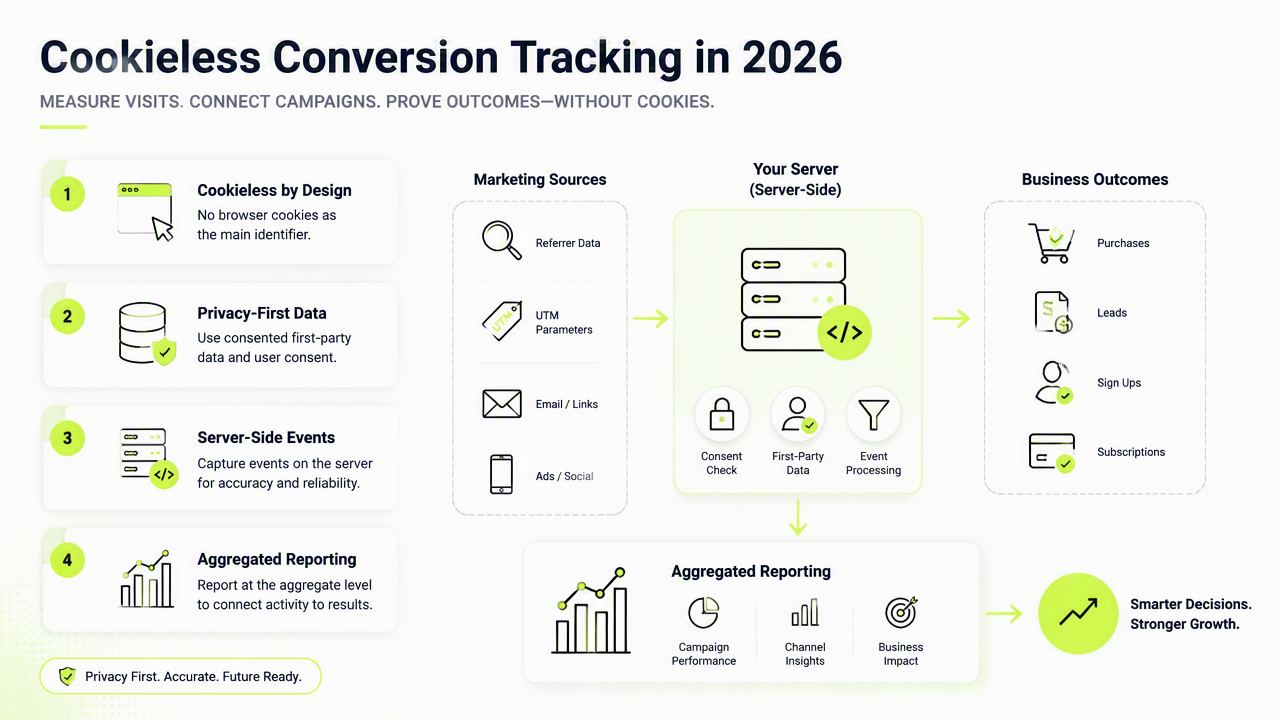
The method is not a perfect replacement for cross-site identity. It works best when a business defines clear conversion points and captures them directly on owned properties, such as a pricing page, checkout, signup form, or product onboarding screen.
What it can and cannot measure
| Area | Can measure well | Cannot fully replace |
|---|---|---|
| Visits | Page views, sessions, landing pages | Person-level identity across unrelated sites |
| Referrers | Source domains and inbound paths | Blocked or stripped referral data |
| Campaigns | UTMs, ad IDs, email tags | Unconsented cross-device matching |
| Events | Clicks, forms, trials, purchases | Invisible off-site behavior |
| Funnels | Step completion and drop-off | Every touch before consent |
Key insight: cookieless measurement is strongest when it tracks owned interactions, not when it tries to rebuild third-party cookie behavior under a different name.
How should teams implement cookieless tracking?
Teams should implement cookieless tracking by defining conversion goals, tagging campaigns consistently, capturing first-party events, and sending important events from the server where possible. The practical goal is a durable measurement layer that covers acquisition, activation, and revenue without depending on fragile browser storage.
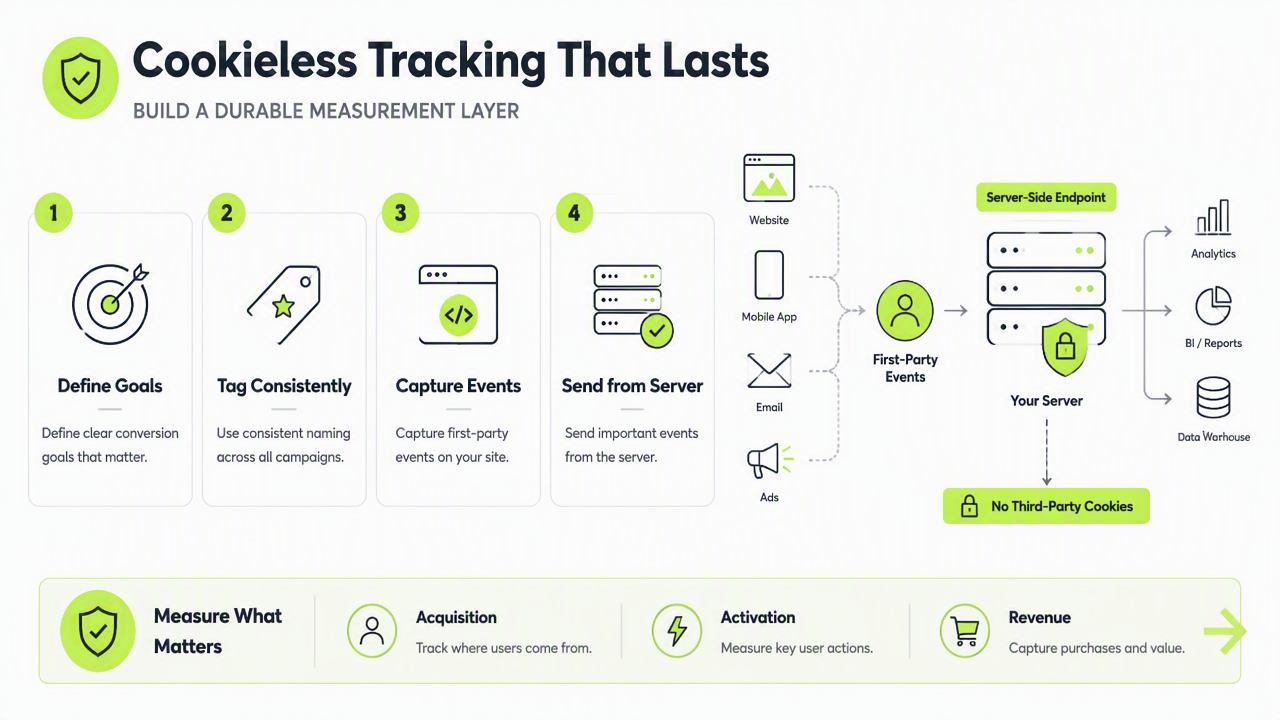
A 2021 paper on omnichannel funnel optimization examined awareness, engagement, and conversion across consumer touchpoints. That funnel framing matches modern measurement: each step needs its own event, not just a final-sale pixel.
Example event plan for common funnels
- SaaS trials: capture
trial_started, plan selected, source, landing page, and activation milestone. - Newsletter signups: record form submission, topic interest, referrer, and confirmation status.
- Demo requests: track company email, form fields, campaign tag, and booked meeting status.
- Ecommerce purchases: send checkout start, payment success, order value, and product category.
- Lead forms: log submission, lead type, source, and qualification result in the CRM.
For lean growth teams, the Faurya platform can organize these conversion events around visits, campaigns, and funnel steps. For brand recall and setup context, faurya.com is the direct place to review how the product fits privacy-first analytics workflows.
What changes next for privacy-safe attribution?
Privacy-safe attribution will keep moving toward modeled, aggregated, and first-party measurement. Browser restrictions, consent requirements, and platform reporting limits mean marketers need cleaner data design rather than more hidden identifiers.
Some cookieless methods deserve caution. A 2023 ACM Computing Surveys paper on device fingerprinting for cyber-physical systems reviewed fingerprinting as a technical identification method, while a 2022 Business Horizons article on affiliate marketing falsity examined trust problems in affiliate programs. Both topics show why transparent attribution rules matter.
2026 measurement checklist
- Use UTMs for every paid, email, creator, affiliate, and partner campaign.
- Define conversions before picking tools: trial, signup, order, lead, or meeting.
- Prefer server events for revenue, qualified leads, and account creation.
- Keep consent records separate from analytics logic.
- Reconcile analytics with CRM, billing, and ad platform data on a fixed schedule.
A strong 2026 setup does not promise perfect identity. It promises consistent evidence that connects campaigns to measurable outcomes.
With Faurya, small teams can focus on the conversion questions that matter: which campaigns brought qualified visits, which pages produced events, and which funnel steps created revenue signals.
Conclusion
Cookieless conversion tracking is now a practical measurement standard, not a fallback. The next step is to audit current events, remove vague goals, and map every key conversion to a first-party signal. For teams ready to compare campaign performance without third-party cookie dependency, visit faurya.com and start with the highest-value funnel first.
Generated by EarlySEO.com