Matomo vs Fathom Analytics: Privacy, Features, and Fit
Compare Matomo and Fathom Analytics by privacy, speed, features, pricing fit, legal needs, and SaaS growth use cases.

TL;DR
Matomo fits teams that need deeper reporting, ecommerce tracking, and more control. Fathom Analytics fits teams that want lightweight, privacy-first analytics with faster setup and fewer dashboards.
Matomo vs Fathom Analytics is really a choice between depth and simplicity. Privacy-focused SaaS founders, marketers, and ecommerce operators often compare both after leaving Google Analytics. For teams evaluating a broader privacy-first stack, Faurya offers a useful reference point for analytics governance and growth workflows.
Table of Contents
Matomo vs Fathom Analytics: Core difference
Matomo: an analytics platform known for deeper reporting, ecommerce analytics, and self-hosting options.
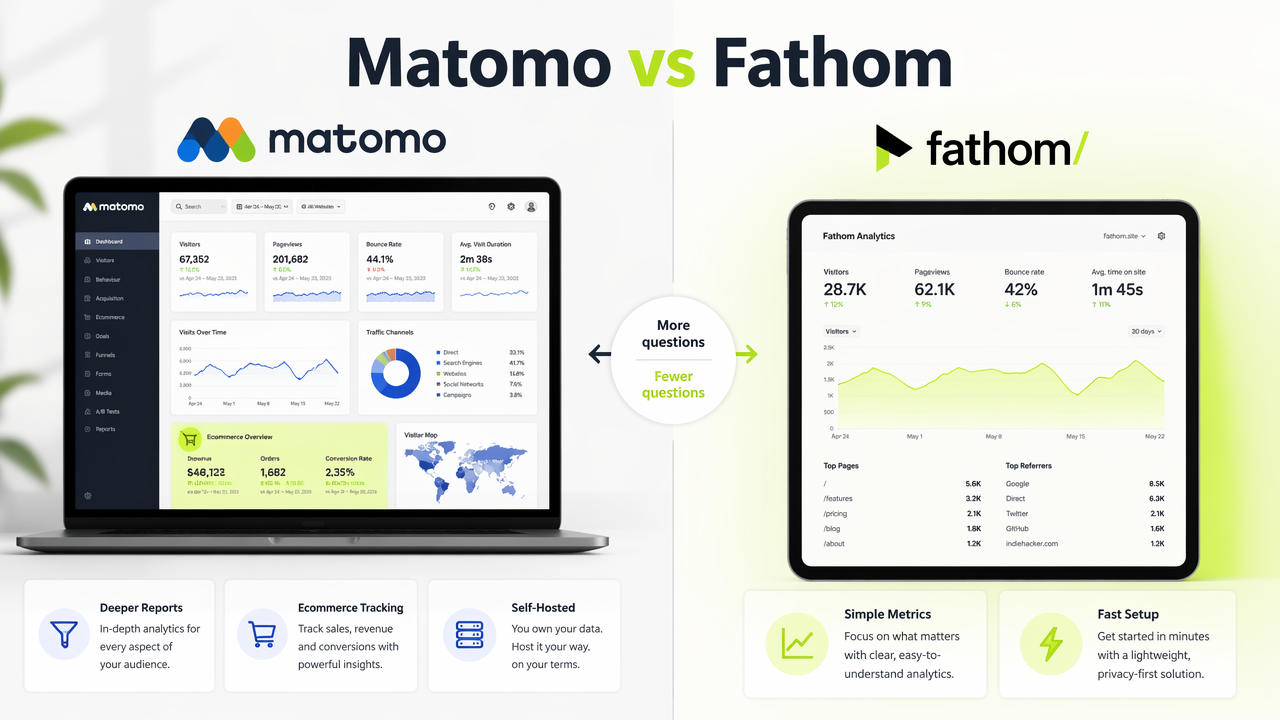
Fathom Analytics: a lightweight website analytics tool focused on privacy, simple dashboards, and fast page loading.
Matomo is generally the stronger fit for teams that need detailed visitor, campaign, and conversion analysis. Fathom is better for lean teams that prefer clean metrics, low setup effort, and fewer configuration choices.
Key insight: Matomo answers more questions, while Fathom makes fewer questions easier to answer.
A company is a legal entity formed around a shared objective, and that matters here because analytics decisions affect compliance, contracts, and customer trust. Law sets the rules that regulate behavior, so privacy analytics choices should match legal obligations, not just dashboard preferences.
Side-by-side comparison table
| Category | Matomo | Fathom Analytics | Best fit |
|---|---|---|---|
| Reporting depth | Advanced | Simple | Matomo |
| Setup effort | Higher | Lower | Fathom |
| Ecommerce analytics | Stronger | Limited | Matomo |
| Privacy focus | Strong | Strong | Tie |
| Self-hosting | Available | Not the main model | Matomo |
| Speed positioning | Heavier | Fathom claims its script loads more than 14 times faster than Matomo on its comparison page | Fathom |
The main tradeoff is not quality. It is operating style. Matomo rewards teams willing to configure analytics carefully, while Fathom rewards teams that want a minimal system running quickly.
Privacy, legal, and data ownership fit
Privacy is the shared reason Matomo and Fathom appear in the same buying shortlist. Both are positioned as alternatives to ad-driven analytics platforms, and both appeal to website owners that want less invasive tracking.
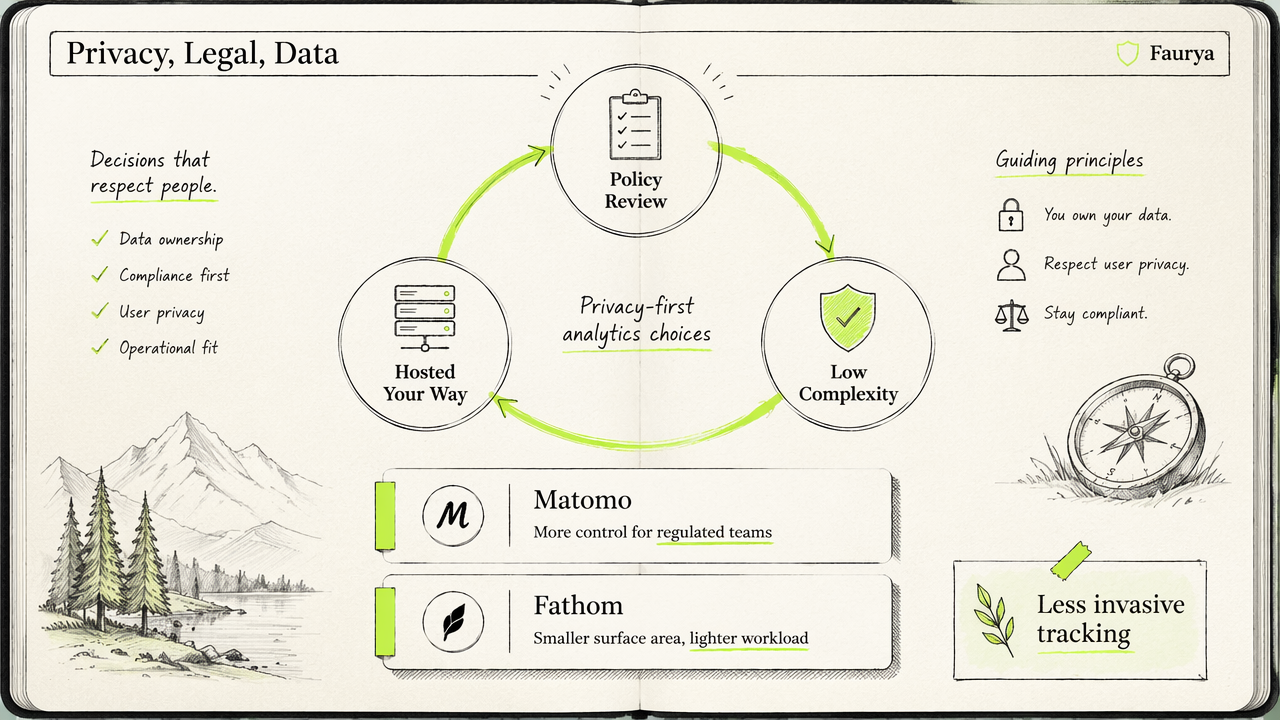
Matomo gives organizations more control over hosting and data configuration. That can help regulated teams align analytics with internal policies, vendor reviews, and data residency requirements.
Fathom keeps the legal workload lighter by reducing complexity. Its value is not a long feature list, but a small surface area for privacy-conscious measurement.
- Pick Matomo when analytics data needs to connect with ecommerce, campaigns, and custom reporting.
- Pick Fathom when page views, referrers, events, and conversions are enough.
- Review vendor legal pages before deployment, not after launch.
Legal resources to check before choosing
Analytics tools should be reviewed with the same discipline as payment, CRM, or email software. Internal legal and privacy resources are part of that review, including a published privacy policy, clear terms of service, and a signed data processing agreement.
The Faurya platform treats these documents as part of the operating layer for privacy-aware growth. That matters because analytics data can reveal behavior patterns, acquisition sources, and conversion paths, even when tools avoid invasive tracking.
Which platform should different teams pick?
Matomo is best for teams that need analytical range. Fathom is best for teams that value speed, clean reporting, and low maintenance.
For SaaS founders and indie hackers, Fathom often matches the early stage need: traffic, referrers, conversions, and quick answers. For ecommerce teams, Matomo usually has the advantage because product, channel, and funnel analysis require more detail.
Growth teams sit in the middle. A small content-led team may prefer Fathom. A performance marketing team with multiple campaigns, landing pages, and conversion paths may outgrow it.
Decision rule: choose Fathom for clarity, choose Matomo for control, and choose a broader platform when analytics must connect to privacy operations and ROI tracking.
Practical selection checklist for 2026
- Define the required metrics before comparing dashboards.
- Confirm whether self-hosting, data residency, or vendor review is required.
- Check ecommerce, campaign, and conversion reporting needs.
- Test page speed impact on core landing pages.
- Review pricing against traffic growth, not only current volume.
- Document legal ownership of analytics data.
Faurya is worth considering when analytics decisions sit inside a wider growth and compliance process rather than a single tracking script. For direct evaluation, visit faurya.com and compare tool requirements against internal privacy standards.
Conclusion
The Matomo vs Fathom Analytics decision comes down to depth versus simplicity. Matomo suits teams that need richer reporting and control; Fathom suits teams that want lightweight, privacy-first measurement. Next, shortlist required metrics, review legal obligations, then test one production page before committing across a full site.
Generated by EarlySEO.com