Faurya vs Matomo: Privacy Analytics Comparison for 2026
Compare Faurya and Matomo on setup, maintenance, reporting depth, privacy controls, performance impact, and team fit.

TL;DR
Faurya is the better fit for teams that want simple cookieless analytics with low maintenance. Matomo suits organizations that need deeper configuration, broader analytics controls, and more involved governance.
Faurya vs Matomo is a choice between focused privacy analytics and a broader configurable analytics platform. Faurya is designed for lightweight, cookieless website reporting, while Matomo is commonly positioned in 2026 comparison research as stronger for complex analytics needs. The right choice depends on setup tolerance, reporting depth, privacy workflow, and long-term maintenance capacity.
Table of Contents
Faurya vs Matomo at a glance
Faurya vs Matomo comes down to simplicity versus configurability.
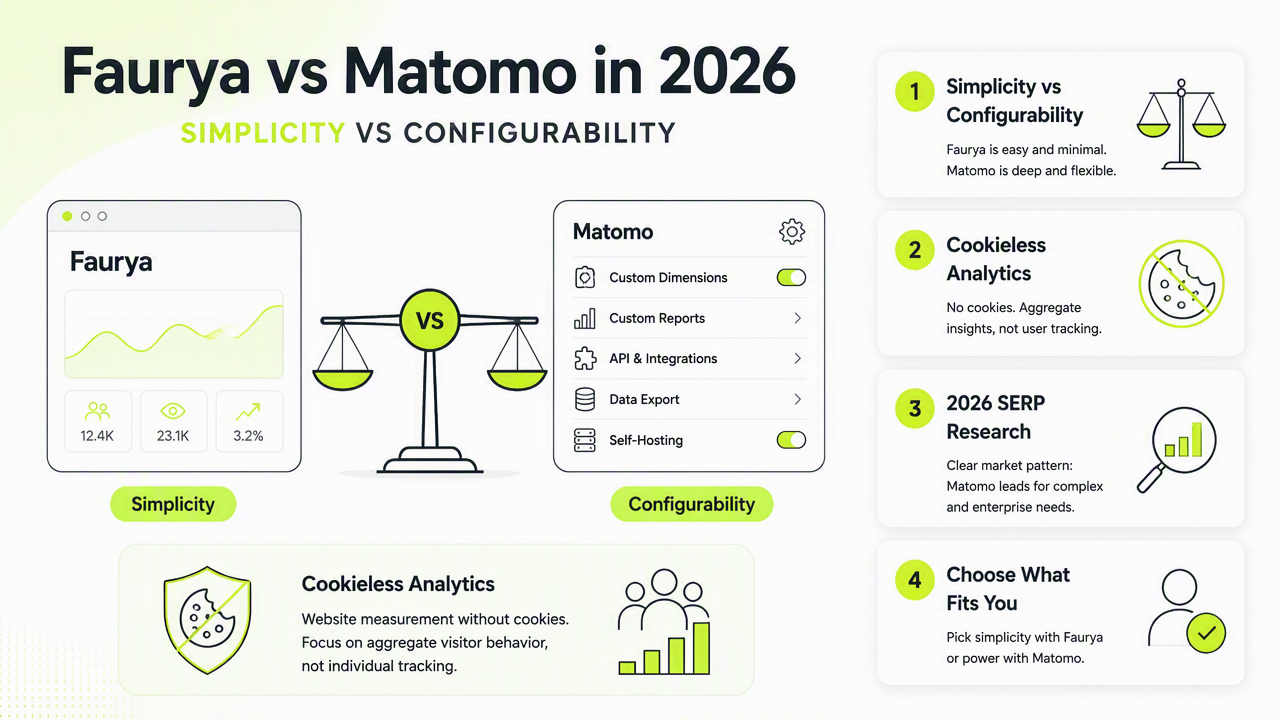
Cookieless analytics: website measurement that avoids browser cookies and focuses on aggregate visitor behavior rather than individual tracking.
SERP research for 2026 shows a clear market pattern: Matomo is often described as a better fit for complex analytics, while simpler privacy-first tools are framed around speed, clean reporting, and lower operational effort. That distinction matters for SaaS founders, indie hackers, e-commerce operators, and lean growth teams that need marketing signals without turning analytics into a side project.
Key insight: simple analytics reduces decision drag, while configurable analytics expands analysis options at the cost of setup and upkeep.
Decision table for setup, privacy, and reporting
| Comparison area | Faurya | Matomo |
|---|---|---|
| Best fit | Simple cookieless analytics workflow | Broad configurable analytics platform |
| Setup effort | Lower, suited to lean teams | Higher, suited to technical teams |
| Maintenance | Minimal ongoing attention | More governance and configuration |
| Reporting style | Clean traffic and conversion visibility | Deeper analytics controls and reports |
| Privacy workflow | Privacy-first by default | Privacy-capable with more settings |
| Performance impact | Built for lightweight tracking | Depends on configuration and deployment |
The Faurya platform is strongest when a team needs fast answers about campaigns, content, and conversions without managing a large analytics stack. Matomo is stronger when analytics teams need more control over configuration, reporting structure, and data governance.
Setup, maintenance, and performance tradeoffs
Setup effort is the first practical difference between these two analytics choices.
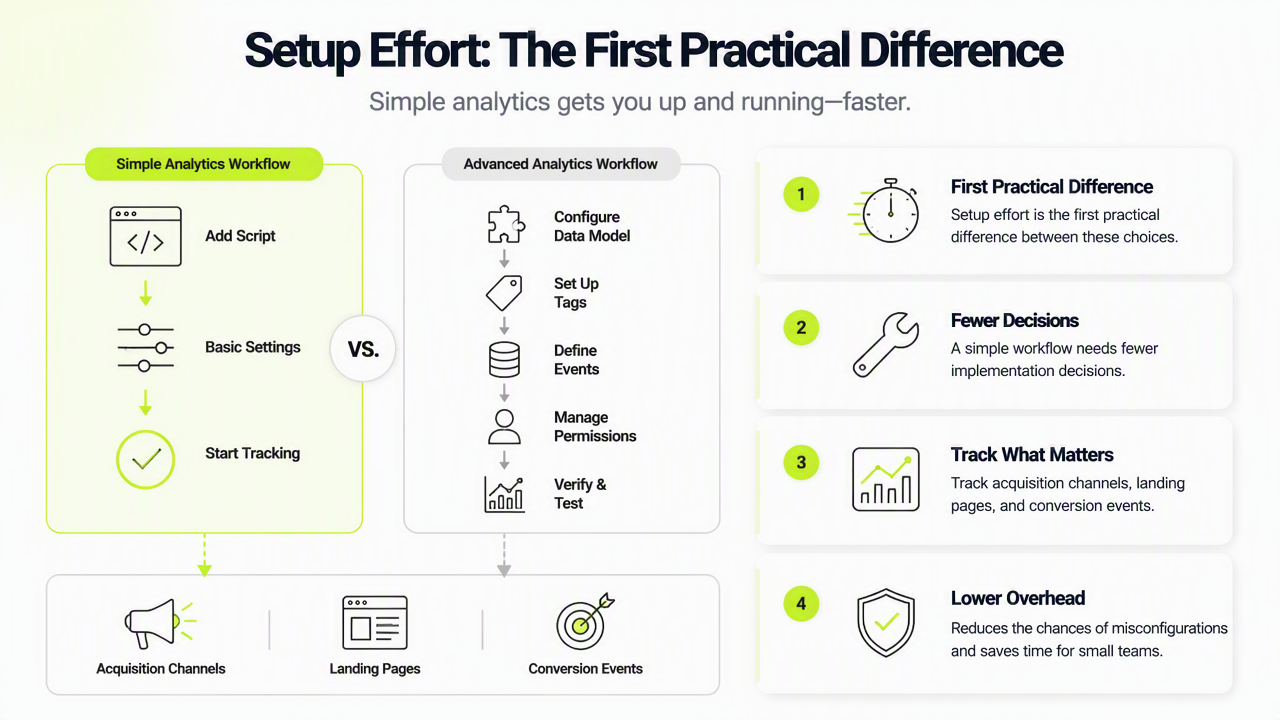
A simple analytics workflow usually needs fewer implementation decisions. That helps small teams track acquisition channels, landing pages, and conversion events without spending cycles on advanced configuration. It also reduces the chance that reporting becomes delayed because tagging, dashboards, or consent settings need extra review.
Matomo can support more advanced analytics structures, but that flexibility brings more decisions. Teams may need to think through hosting model, consent approach, user roles, event design, custom reports, and long-term maintenance. For organizations with analytics ownership, that depth can be valuable.
- Choose a lighter setup when speed, clarity, and low admin work matter most.
- Choose a configurable setup when advanced reporting and governance justify extra management.
- Review performance impact after implementation, not only during vendor selection.
Operational fit by team size
Solo founders and small marketing teams often need analytics that answers a short list of questions: which campaigns work, which pages convert, and which channels deserve budget. With Faurya, that workflow stays focused on measurement rather than platform administration.
Larger teams may benefit from Matomo when multiple stakeholders need different reporting views. Product, marketing, compliance, and data teams can require more structured controls, especially when analytics connects to internal processes or regulated data policies.
Reporting depth and privacy controls in 2026
Reporting depth should match the decisions the business actually makes.
A lean team rarely needs every possible report. It needs trustworthy traffic, source, page, and conversion data that can guide budget and content decisions quickly. In that case, extra dashboard complexity can slow action rather than improve it.
Matomo fits teams that need a wider reporting surface. Its appeal comes from configurability, especially for organizations that want more control over how analytics is collected, stored, and analyzed. That makes it a serious option for teams with dedicated analytics or compliance resources.
Privacy expectations are also rising in 2026. Website owners increasingly want analytics that respects users, limits tracking exposure, and avoids unnecessary consent friction where legally appropriate. That is why cookieless analytics has become part of the buying conversation, not just a technical preference.
Who should choose each platform
- Pick Faurya when the priority is a clear cookieless analytics workflow, fast setup, and low maintenance.
- Pick Matomo when the priority is deeper configuration, broader analytics controls, and internal governance.
- Reassess the decision when reporting needs change, especially after a team adds dedicated analytics ownership.
The practical rule is simple: simpler tools fit teams that act on a few important metrics, while configurable platforms fit teams that manage analytics as a formal function.
Conclusion
Faurya vs Matomo is not about which tool is universally better; it is about operational fit. Teams that want privacy-first reporting without heavy upkeep should review Faurya and visit faurya.com for the current product details. Teams that need broader analytics configuration should evaluate Matomo against setup time, governance needs, and the reporting depth required before switching.
Generated by EarlySEO.com