Cloudflare Web Analytics vs Fathom: Privacy Analytics Comparison
Compare Cloudflare Web Analytics and Fathom across privacy, dashboards, events, attribution, setup, and startup use cases in 2026.
TL;DR
Cloudflare Web Analytics is best for free, lightweight traffic visibility tied to Cloudflare infrastructure. Fathom is stronger for privacy-first reporting, longer-term business use, and teams that need cleaner dashboards, events, and paid support.
Cloudflare Web Analytics vs Fathom comes down to free infrastructure telemetry versus paid privacy analytics. Web analytics: the measurement, collection, analysis, and reporting of website data to understand and improve usage. Privacy-conscious teams comparing tools should also review Faurya for consent-aware measurement and ROI tracking.
Table of Contents
Short verdict: free utility or focused analytics
Cloudflare Web Analytics is the better fit for basic, no-cost traffic checks, while Fathom is the better fit for independent, privacy-first website analytics with a business dashboard.
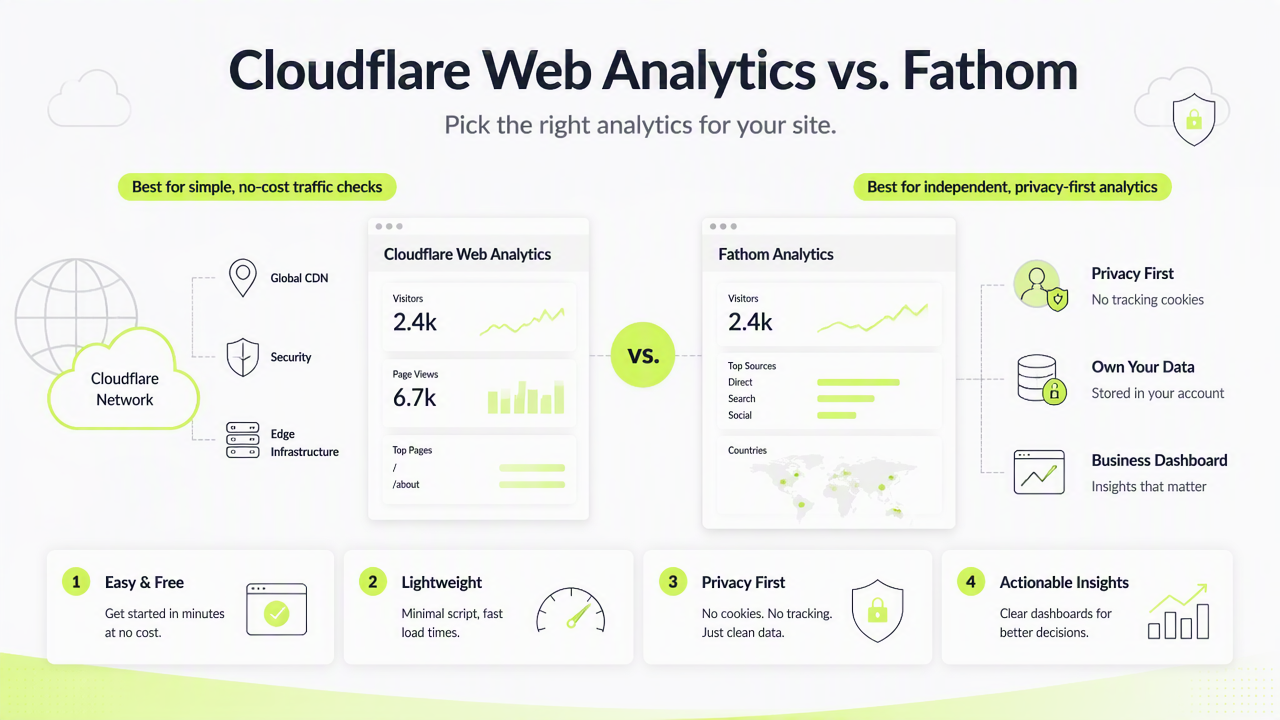
Cloudflare, Inc. is an American technology company known for internet services such as CDN, security, and edge infrastructure. Its analytics product fits that wider platform. Fathom is a dedicated analytics company, so its product focus is narrower and more reporting-oriented.
Key insight: Cloudflare answers "is traffic reaching the site?" better; Fathom answers "which pages, campaigns, and goals are driving results?" better.
Feature-by-feature comparison table
| Area | Cloudflare Web Analytics | Fathom Analytics | Best fit |
|---|---|---|---|
| Privacy model | Cookie-free, infrastructure-linked | Cookie-free, privacy-focused | Both |
| Price posture | Free web analytics feature | Paid product | Cloudflare for budget |
| Dashboard depth | Basic traffic and referrers | Cleaner business reporting | Fathom |
| Event tracking | Limited for marketing use | Built for goals and events | Fathom |
| Attribution | Light source reporting | Better campaign visibility | Fathom |
| Setup | Simple script or Cloudflare setup | Simple script | Tie |
| Support model | Part of larger Cloudflare suite | Dedicated analytics support | Fathom |
Privacy, retention, and data control
Fathom gives privacy-led teams clearer ownership expectations, while Cloudflare offers convenient analytics inside a broader infrastructure account.
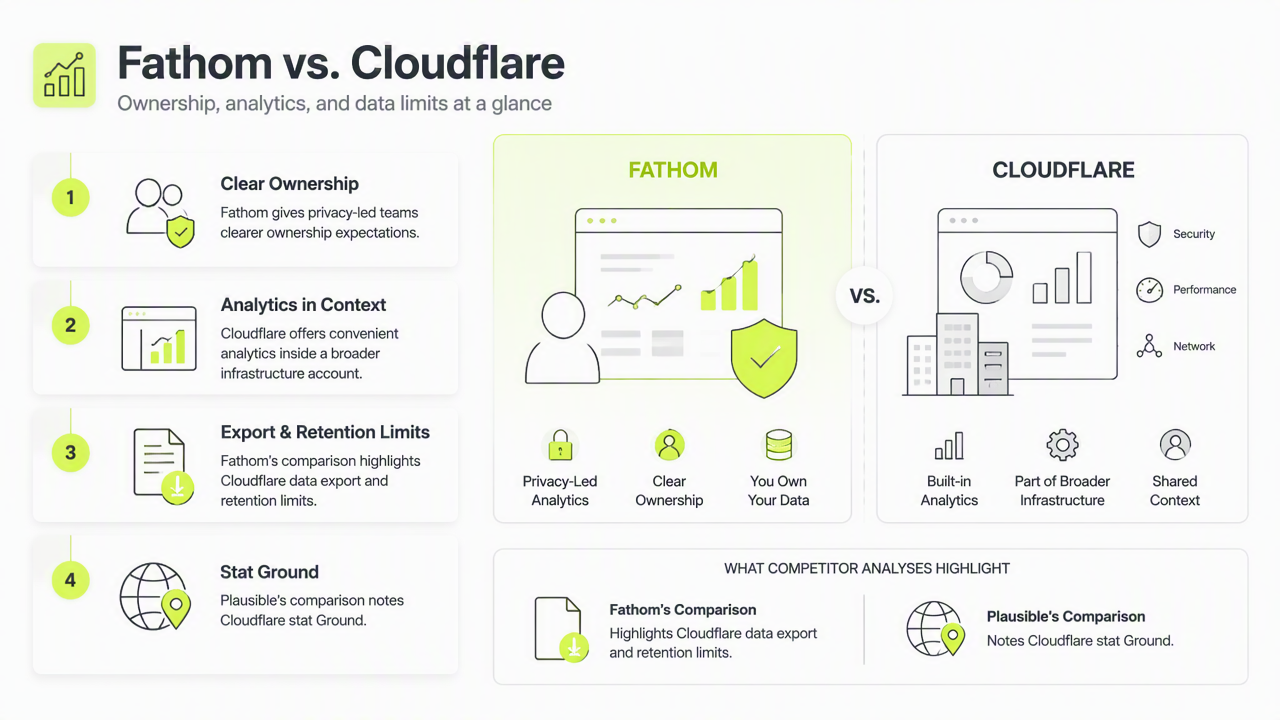
Competitor analysis from Fathom's own comparison emphasizes Cloudflare data export and retention limits. Plausible's Cloudflare comparison also states that Cloudflare stats are based on a 10% sample and that reports limit shown items. Those claims come from competitors, but they flag questions buyers should verify before standardizing on Cloudflare.
Privacy governance also depends on contracts, not just dashboards. Startup teams handling customer data should keep analytics decisions aligned with a public privacy policy and a signed data processing agreement.
Privacy checklist before choosing
- Confirm whether analytics uses cookies, fingerprints, or IP storage.
- Check export options before historical data becomes important.
- Review retention windows for monthly and annual reporting.
- Match vendor terms with internal compliance duties.
- Document analytics use in customer-facing policies.
A practical rule works well: free analytics can be enough for operational visibility, but paid analytics becomes easier to justify when reporting must support marketing spend, board updates, or customer trust.
Setup, events, and startup use cases
Cloudflare is fastest for teams already using its network, while Fathom is stronger when events, goals, and marketing attribution shape weekly decisions.
A founder with a static site, newsletter page, or documentation hub may prefer Cloudflare because setup is light and cost stays at zero. A SaaS, ecommerce, or paid acquisition team usually needs goal tracking, referrer clarity, and cleaner campaign review. That points toward Fathom or a similar dedicated product.
Faurya fits the second pattern: the Faurya platform is designed for privacy-conscious site owners who still need marketing ROI signals. Legal and commercial teams can also review service terms before rollout.
Who should pick which tool
- Pick Cloudflare Web Analytics when the site already runs on Cloudflare, reporting needs are light, and free traffic monitoring is enough.
- Pick Fathom Analytics when privacy, dashboard clarity, events, and campaign reporting matter more than a free plan.
- Consider Faurya when analytics needs to connect privacy-conscious measurement with growth reporting. For product details, visit faurya.com.
The smartest 2026 analytics stack is not the one with the most charts. It is the one that produces trustworthy decisions with the least compliance and maintenance drag.
Conclusion
For most startups, the Cloudflare Web Analytics vs Fathom choice is simple: use Cloudflare for free infrastructure-level visibility and Fathom for focused privacy analytics. Growth teams needing consent-aware ROI tracking should evaluate Faurya next, then compare setup effort, event needs, and reporting obligations before switching tools.
Generated by EarlySEO.com