Cloudflare Web Analytics Alternative for Startups: A 2026 Decision Guide
Compare Cloudflare Web Analytics alternatives for startup reporting, privacy, campaigns, and conversions in 2026.

TL;DR
Cloudflare Web Analytics suits privacy-first traffic monitoring, but startups often need clearer campaign, conversion, and founder-level reporting. Faurya, Plausible, Fathom, Simple Analytics, and Matomo each fit different needs, with the best choice tied to reporting depth, privacy posture, and growth stage.
A free analytics dashboard can become expensive when founders cannot connect traffic to signups, sales, or campaigns. The best Cloudflare Web Analytics alternative for startups keeps privacy-friendly tracking simple while adding the business context needed for growth decisions.
Table of Contents
Why startups outgrow Cloudflare Web Analytics
Startups outgrow Cloudflare Web Analytics when traffic counts no longer explain campaigns, conversions, and revenue quality.
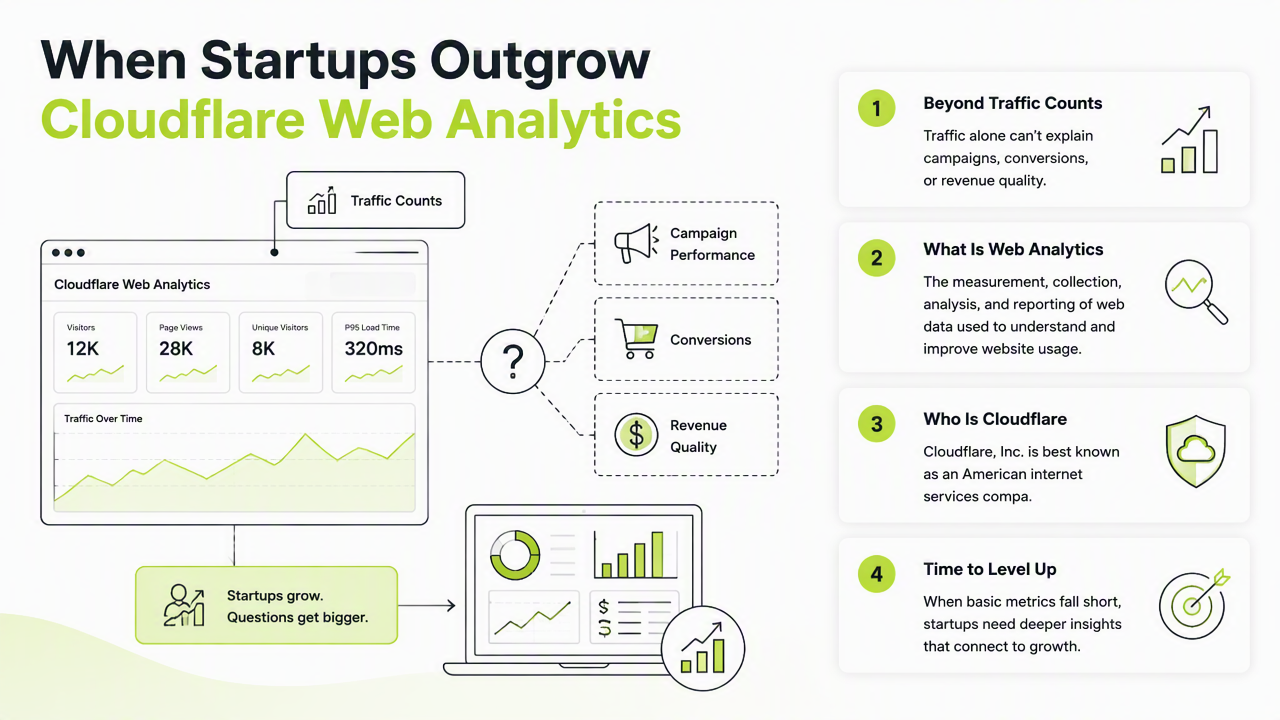
Web analytics: the measurement, collection, analysis, and reporting of web data used to understand and improve website usage.
Cloudflare, Inc. is best known as an American internet services company offering CDN, security, and cloud services. Its analytics product is attractive because it is lightweight and privacy-friendly, but the startup reporting gap appears when marketing questions become more specific.
Plausible's comparison says Cloudflare has strict data retention limits and reports based on a 10% sample. Fathom's comparison also highlights limits around exporting data and short retention.
Key insight: simple pageview reporting is useful early, but campaign and conversion reporting becomes necessary once paid acquisition, launch channels, or onboarding experiments begin.
Signals that basic traffic reporting is not enough
- Paid campaigns need source, medium, and landing page clarity.
- Product-led startups need signup, activation, and trial conversion events.
- E-commerce operators need revenue-adjacent behavior, not only visits.
- Privacy-conscious teams need cleaner reporting without heavy surveillance.
A 2022 Marketing Science paper on GDPR and data governance examined how regulation affects data practices, which reinforces a practical point for 2026: growth reporting and privacy compliance now need to be planned together.
Which alternative fits each startup use case
The right alternative depends on whether a startup needs founder dashboards, privacy-first simplicity, open-source control, or deeper product analytics.
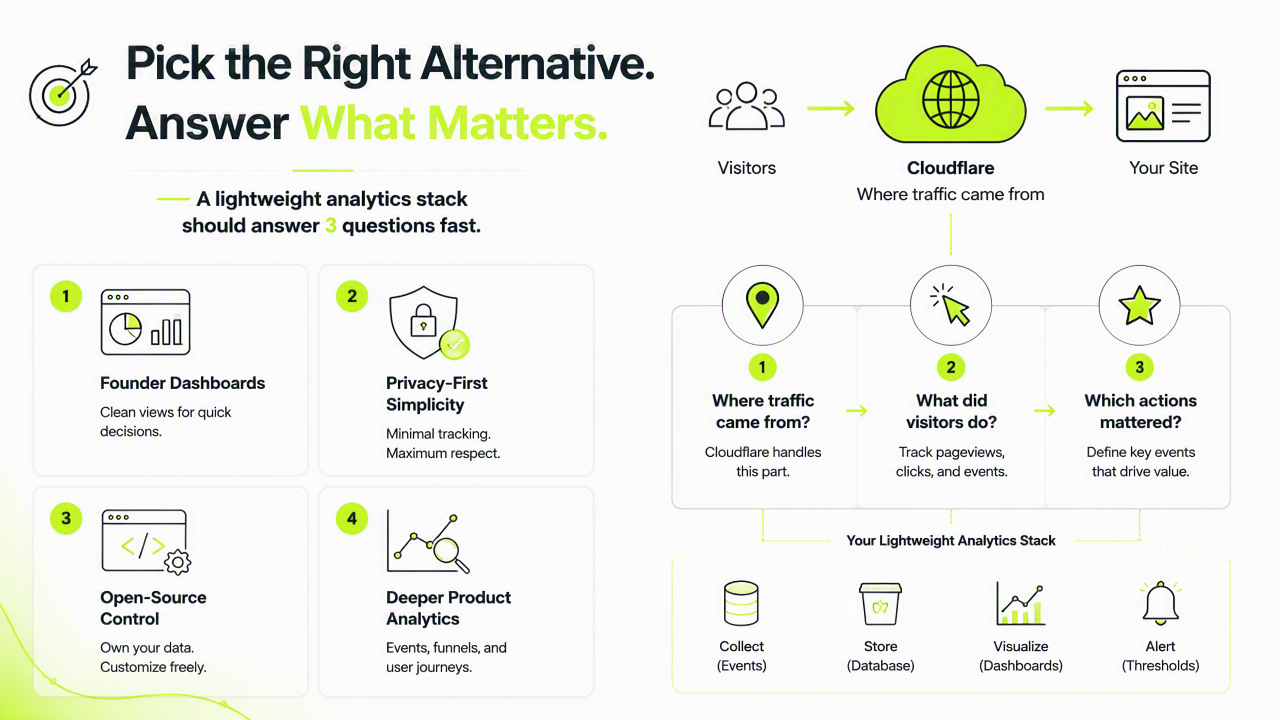
A lightweight analytics stack should answer three questions fast: where traffic came from, what visitors did, and which actions mattered. Cloudflare handles the first layer for many teams, while dedicated analytics tools focus more on marketing and decision support.
Decision table for privacy-first analytics tools
| Tool | Best fit | Startup tradeoff |
|---|---|---|
| Faurya | Founder-friendly campaign and conversion reporting | Strong fit when clarity matters more than dashboard clutter |
| Plausible | Simple privacy-first web analytics | Good for teams wanting a focused Google Analytics alternative |
| Fathom | Privacy-first site metrics with a polished interface | Good for simple reporting and compliance-sensitive teams |
| Simple Analytics | Minimal analytics with privacy positioning | Useful when low-noise reporting is the main goal |
| Matomo | Open-source analytics control | Better for teams with technical setup and governance needs |
| Cloudflare Web Analytics | Free traffic visibility | Works best before campaigns and conversions need deeper analysis |
The Faurya platform stands out for startups that want lightweight analytics without losing the thread between campaigns, conversions, and founder-level reporting. Competitors such as Plausible, Fathom, and Simple Analytics remain strong choices when the main requirement is clean website traffic reporting.
How startups should migrate without losing reporting clarity
Startups should migrate by defining decisions first, then selecting an analytics tool that makes those decisions easier.
Migration does not need a heavy analytics rebuild. The safer approach is to run the new platform beside the current setup, compare core metrics for a short period, and then retire reports that no longer influence action.
A low-risk rollout plan for 2026
- List the five business questions analytics must answer.
- Map key events such as signup, demo request, checkout, or activation.
- Keep naming consistent across UTM parameters and campaigns.
- Run parallel tracking long enough to spot reporting differences.
- Move recurring founder updates into one simple dashboard.
- Review privacy, consent, and retention requirements before launch.
Research on scale-up strategies in Long Range Planning studied how companies configure activity during scaling, including the need to align operations as growth changes. The paper, Scale-up modes, supports a useful operating principle: analytics should evolve with the business model, not stay frozen at the first free tool.
For startups using Faurya, that means campaign and conversion reporting can sit closer to weekly growth decisions instead of becoming a separate reporting chore.
Conclusion
A Cloudflare Web Analytics alternative for startups should not add complexity for its own sake. It should turn privacy-friendly measurement into clearer acquisition, conversion, and founder reporting.
The next step is practical: compare one current report against one decision that affects revenue. For a focused path, review Faurya and visit faurya.com before the next campaign launch.
Generated by EarlySEO.com