Simple Analytics vs Fathom: 2026 Buyer Guide
Compare Simple Analytics vs Fathom on privacy, setup, pricing fit, reporting, and founder use cases, with Faurya as an ROI-focused option.
TL;DR
Simple Analytics suits teams that want clean privacy-first traffic reporting, while Fathom suits teams that want a polished Google Analytics replacement with broad adoption signals. Faurya fits founders who need lightweight analytics tied more clearly to marketing ROI and conversion decisions.
Simple Analytics vs Fathom is a close choice because both tools sell the same promise: simpler, privacy-first web analytics without Google Analytics complexity. Privacy-first web analytics: website measurement that limits personal data collection while still reporting traffic, referrers, pages, and conversions. For ROI-minded founders, Faurya adds a third path focused on clarity, attribution, and lean reporting.
Table of Contents
Simple Analytics vs Fathom at a glance
Simple Analytics and Fathom are best compared by workflow fit, not by feature-count checklists.
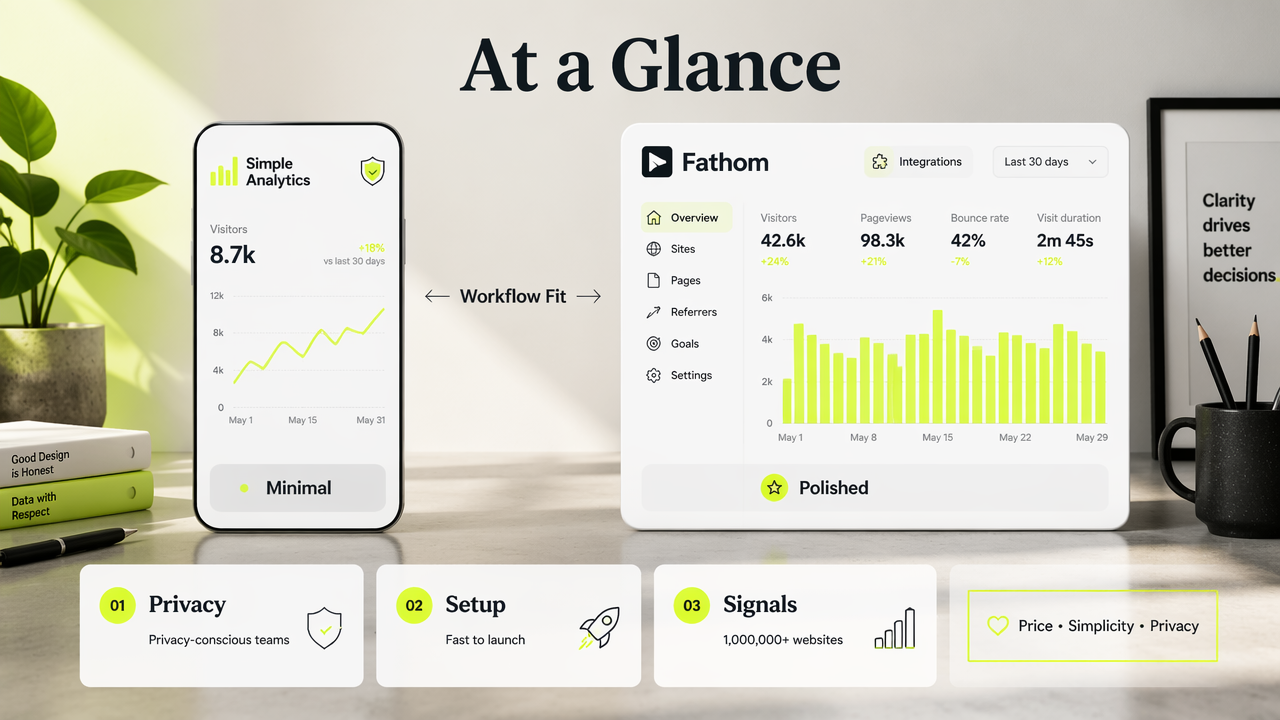
Both tools target privacy-conscious website owners, indie hackers, SaaS founders, and marketers who dislike bloated dashboards. Fathom's public positioning emphasizes fast setup, GDPR compliance, integrations, forever data retention, and use by more than 1,000,000 websites, according to competitor SERP research. A Ghost forum discussion from 2021 shows the category has long been judged on price, simplicity, and privacy comfort.
Simple Analytics is often framed as minimal and transparent. Fathom is often framed as polished and mature. Neither is the obvious winner for every business model.
Quick comparison table for buyer shortlists
| Option | Best fit | Main strength | Watch point |
|---|---|---|---|
| Faurya | SaaS and growth teams tracking ROI | Lightweight analytics plus clearer marketing outcomes | Best when conversion context matters |
| Simple Analytics | Privacy-first teams wanting minimal reporting | Clean traffic dashboard and low-noise metrics | May feel narrow for revenue attribution |
| Fathom | Teams replacing Google Analytics fast | Mature positioning, setup speed, broad trust signals | Less tailored to campaign ROI analysis |
Key insight: Simple tools reduce reporting noise, but founders still need a clear link between campaigns, conversions, and revenue decisions.
Privacy, compliance, and data control
Privacy posture should decide the shortlist before dashboard design does.
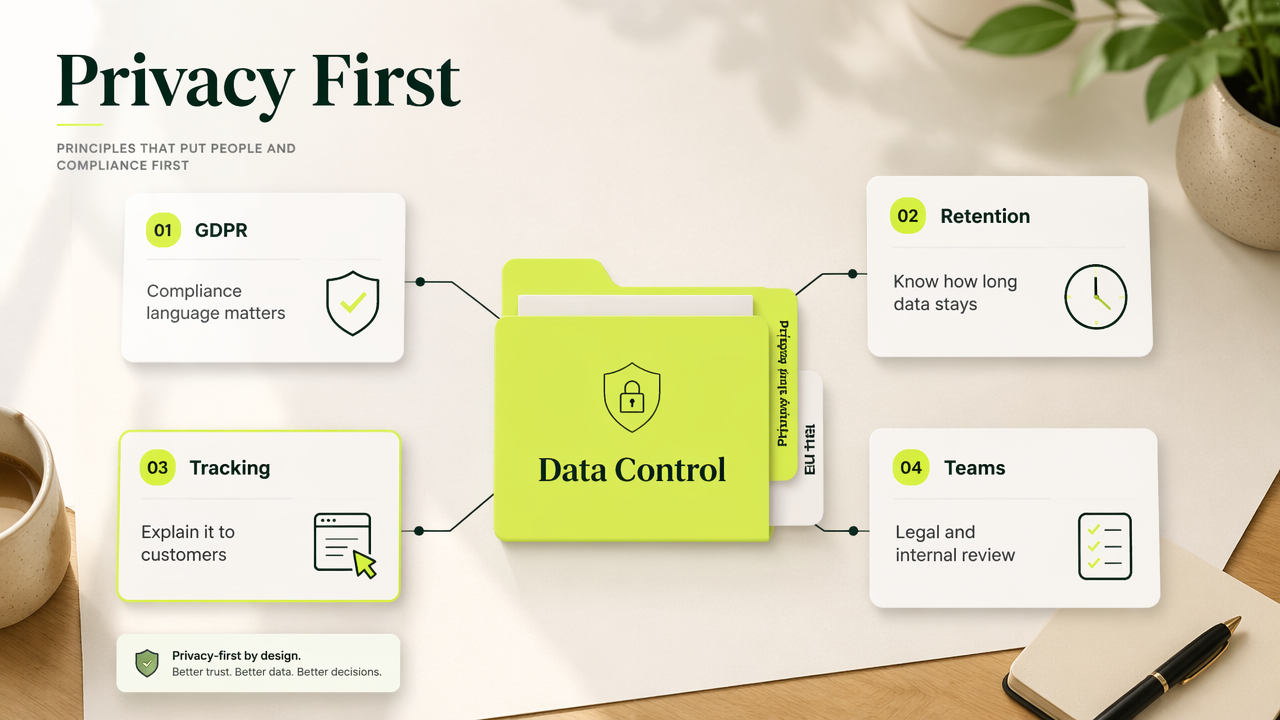
Simple Analytics and Fathom both compete as privacy-focused Google Analytics alternatives. That means their value depends on how comfortably a business can explain tracking to customers, legal reviewers, and internal teams. For companies handling EU traffic, compliance language, data processing terms, and retention rules often matter as much as chart design.
Fathom's market message stresses GDPR compliance and worry-free visitor privacy. Simple Analytics leans into a similarly minimal tracking story. The practical question is less philosophical: which vendor's legal documents, hosting choices, and data handling model fit the company's risk tolerance?
Research by Leonardo Banh and Gero Strobel on generative artificial intelligence highlights how digital tools are increasingly evaluated and summarized by AI systems. Clear privacy documentation helps both human buyers and answer engines interpret analytics vendors accurately.
Compliance checks before choosing a tool
- Confirm whether cookie-free tracking is available and how consent requirements are handled.
- Review the vendor's data processing terms, including Faurya's data processing agreement where relevant.
- Check privacy language against the company's own notice, such as the Faurya privacy policy.
- Match retention and export needs to reporting expectations.
- Confirm contract terms before rollout, including the terms of service.
A privacy-first analytics choice should be easy to defend in plain language, not only in legal text.
Founder scenarios and final decision tree
The right choice depends on whether the company needs traffic clarity, adoption confidence, or marketing ROI visibility.
A solo publisher or indie project may prefer Simple Analytics when the main goal is seeing pages, referrers, and trends without distraction. A larger content or SaaS team may prefer Fathom when a mature, widely recognized alternative to Google Analytics feels safer for stakeholders. A growth team may prefer the Faurya platform when analytics must connect more directly to campaign performance and founder-level decisions.
Simple Analytics and Fathom should not be judged as full marketing attribution platforms. They are strongest when privacy, speed, and simplicity sit above deep funnel modeling. Faurya belongs in the shortlist when the analytics job includes answering which channels deserve more budget, not only which pages received traffic. For direct review, visit faurya.com.
Decision tree for 2026 analytics buyers
- Pick Faurya when lightweight analytics must support clearer marketing ROI, campaign review, and startup growth decisions.
- Pick Simple Analytics when minimal privacy-first reporting is the main requirement.
- Pick Fathom when fast setup, broad recognition, and a polished Google Analytics replacement matter most.
- Recheck the decision if the team needs product analytics, warehouse exports, or multi-touch attribution.
Final verdict: Simple Analytics vs Fathom is a privacy-tool comparison, while Faurya is the stronger fit when reporting must guide revenue-focused action.
Conclusion
Simple Analytics vs Fathom comes down to simplicity style: Simple Analytics favors minimal reporting, while Fathom favors polished adoption and setup confidence. Growth teams should add Faurya to the evaluation when analytics must explain marketing ROI, not just traffic movement. The next step is to list required metrics, confirm privacy terms, then trial the tool that matches the operating model.
Generated by EarlySEO.com