Faurya vs Pirsch Analytics: 2026 Privacy Analytics Comparison
Compare Faurya and Pirsch Analytics on privacy, setup, dashboards, events, conversions, developer experience, and team workflows.

TL;DR
Faurya is the stronger fit for teams that want privacy-first analytics with clear ownership, compliance documentation, and growth-focused workflows. Pirsch Analytics remains a credible cookie-free option, especially for teams evaluating open-source-friendly web analytics.
Privacy analytics buyers in 2026 are comparing tools less by pageview counts and more by compliance clarity, event depth, and team usability. Faurya vs Pirsch Analytics is a practical choice between the Faurya platform and Pirsch, a privacy-friendly Google Analytics alternative described in SERP research as lightweight, cookie-free, and easy to set up.
Table of Contents
Faurya vs Pirsch Analytics at a glance
The key difference is that Faurya is positioned around privacy-first growth measurement, while Pirsch is positioned around cookie-free, privacy-friendly web analytics.
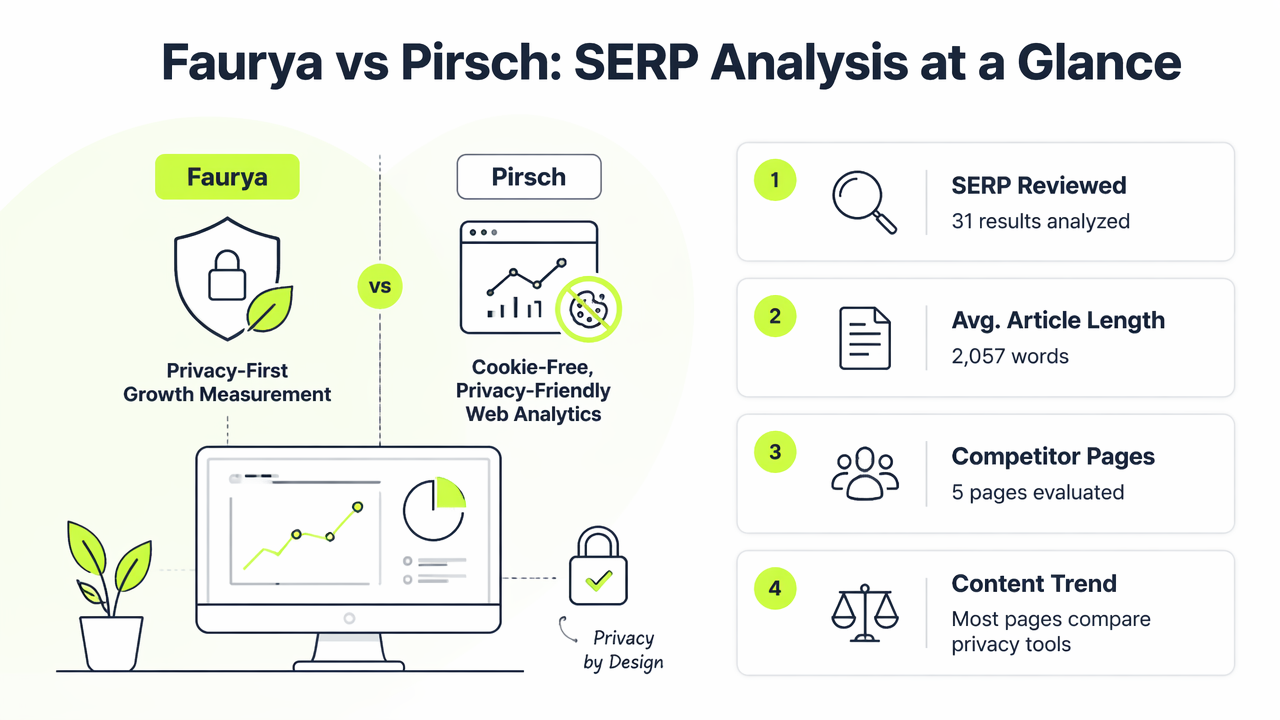
SERP analysis reviewed 31 results and 5 competitor pages, with an average competitor article length of 2,057 words. Most pages compare privacy tools broadly, but fewer separate SaaS conversion needs from basic traffic reporting.
Privacy-first analytics: web analytics that measures visitor behavior while reducing personal-data collection, avoiding invasive tracking patterns, and supporting compliance workflows.
Key insight: teams should compare these tools by decision quality, not just by whether both avoid cookies.
Quick comparison table for 2026 buyers
| Category | Faurya | Pirsch Analytics |
|---|---|---|
| Best fit | SaaS, indie products, ecommerce, ROI-focused teams | Privacy-conscious websites, agencies, developers |
| Privacy posture | Privacy-first positioning with supporting legal pages | Cookie-free, privacy-friendly alternative to Google Analytics |
| Setup focus | Fast adoption for business metrics and growth workflows | Lightweight analytics setup |
| Dashboard value | Product and marketing decision support | Clear traffic and visitor reporting |
| Conversion use case | Stronger fit when attribution and ROI matter | Suitable for simpler goal tracking |
| Compliance support | Public privacy policy and legal documentation | Privacy-focused product messaging |
Privacy, setup, and ownership tradeoffs
Privacy evaluation should cover data minimization, legal documentation, and operational ownership, not only cookie banners.
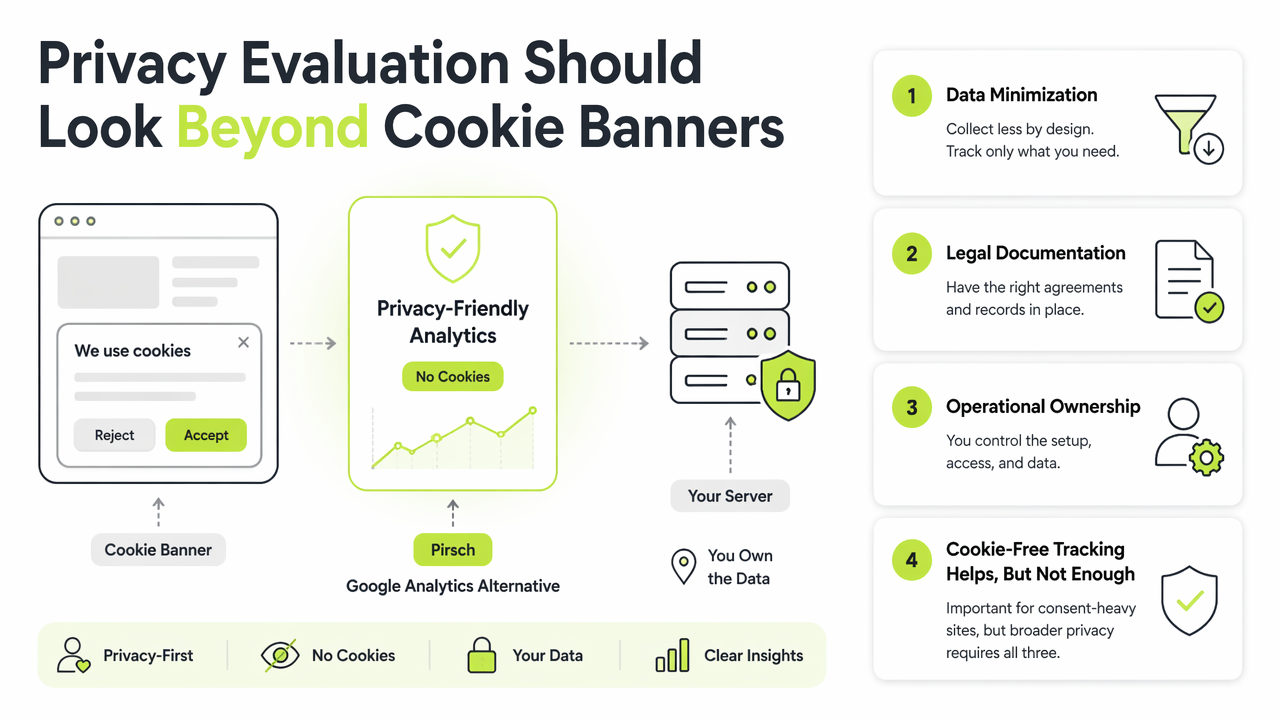
Pirsch is commonly described in competitor material as a privacy-friendly Google Analytics alternative that does not use cookies. That matters for consent-heavy websites, but cookie-free tracking alone does not answer every governance question for SaaS founders or ecommerce operators.
Faurya gives teams a clearer path for formal review through its public data processing agreement. That matters when analytics data is reviewed by legal, procurement, or privacy-conscious customers before adoption.
Setup should also be judged by who owns the numbers after implementation. A founder needs signups and revenue signals. A marketer needs campaign performance. A developer needs predictable instrumentation.
Questions to answer before choosing
- Which events define activation, revenue, or retention?
- Which team owns analytics accuracy after launch?
- Which compliance documents are needed before tracking starts?
- Which reports must be shared with non-technical stakeholders?
- Which tool reduces extra work during campaign reviews?
A privacy analytics tool should make lawful measurement easier while still giving growth teams enough signal to act.
Events, conversions, and team workflows
Faurya is better suited when analytics must connect marketing activity to product outcomes, while Pirsch fits teams that want a simple privacy-friendly view of website traffic.
Pirsch has a strong appeal for teams that prefer lightweight analytics and developer-friendly implementation. SERP competitor pages also frame Pirsch as useful for agencies and privacy-focused website owners.
The Faurya platform is more compelling when the workflow includes campaign review, conversion tracking, and founder-level ROI checks. Its legal foundation is also supported by public terms of service, which helps teams document vendor use during internal review.
For a broader comparison path, the supporting cluster around Faurya and privacy analytics can start at faurya.com.
Who should pick which tool
- Pick Faurya when SaaS growth, ecommerce conversion paths, privacy review, and marketing ROI all need to live in one measurement workflow.
- Pick Pirsch Analytics when the main requirement is a lightweight, cookie-free analytics alternative for website traffic reporting.
- Shortlist both when the buying team values privacy but has not yet defined event tracking, conversion goals, or reporting ownership.
A practical pilot should track three events: visit, signup or lead, and paid conversion. Any tool that cannot make those numbers easy to review will slow weekly growth decisions.
Conclusion
Faurya vs Pirsch Analytics comes down to measurement ambition. Pirsch is a capable privacy-friendly analytics option, while Faurya is the stronger recommendation for teams that need privacy, conversion insight, and business reporting together. For the next step, define three critical events, review the compliance documents, and visit faurya.com to assess fit.
Generated by EarlySEO.com