Cookie Banner Alternatives for Analytics: A 2026 Guide
Compare cookieless analytics, server logs, and consent-based tracking, with practical checks for privacy, jurisdiction, and measurement tradeoffs.

TL;DR
Aggregate analytics may reduce reliance on cookie banners, but cookie-free collection doesn't automatically remove consent obligations. Choose a method based on jurisdiction, identifiers, and reporting needs, then audit every tracking script before changing the banner.
Cookie banner alternatives for analytics change how websites measure activity, not just how consent notices look. For teams exploring Faurya, the starting point is a measurement plan built around useful business questions.
Cookieless analytics: website measurement that operates without storing analytics cookies in a visitor's browser.
Table of Contents
When can analytics operate without a cookie banner?
Analytics can operate without a cookie banner when its implementation meets applicable rules for device access and personal-data processing. In 2026, removing cookies alone isn't a reliable legal test. EU and UK requirements can differ, and any audience-measurement exemption depends on local conditions, purposes, and configuration.
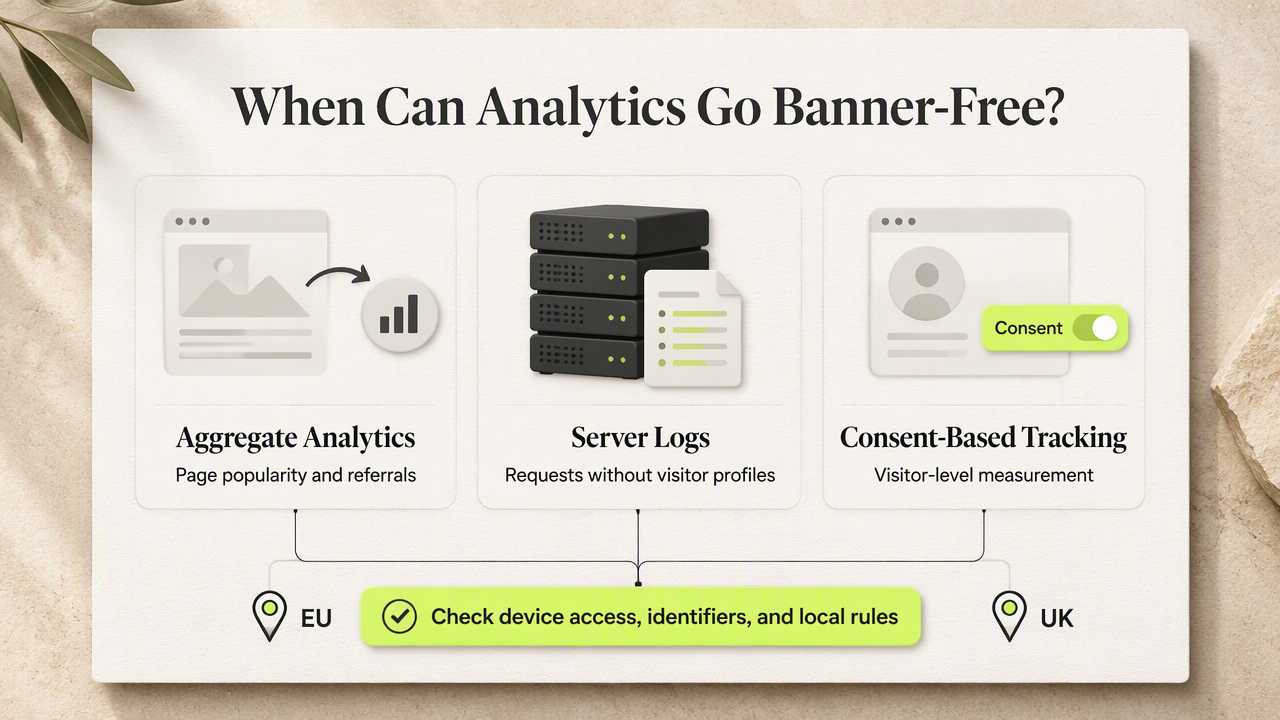
Compare three measurement approaches
Aggregate reporting, server logs, and consent-based tracking serve different measurement needs.
| Approach | Useful for | Main consideration |
|---|---|---|
| Cookieless aggregate analytics | Page popularity and referral trends | Check identifiers and device access |
| Server-log analysis | Requests and technical traffic | Logs can contain IP addresses |
| Consent-based analytics | Visitor-level attribution | Requires appropriate consent controls |
A server-side setup isn't automatically anonymous. Moving collection away from the browser changes the architecture, but doesn't necessarily change the data's legal status.
Sites should assess analytics separately from advertising pixels, embedded media, and other third-party scripts. An exempt analytics setup doesn't make those other technologies exempt.
Banner-free measurement is a configuration and jurisdiction decision, not a label attached to a product.
How should teams implement privacy-preserving analytics?
- Define the business questions privacy-preserving analytics must answer.
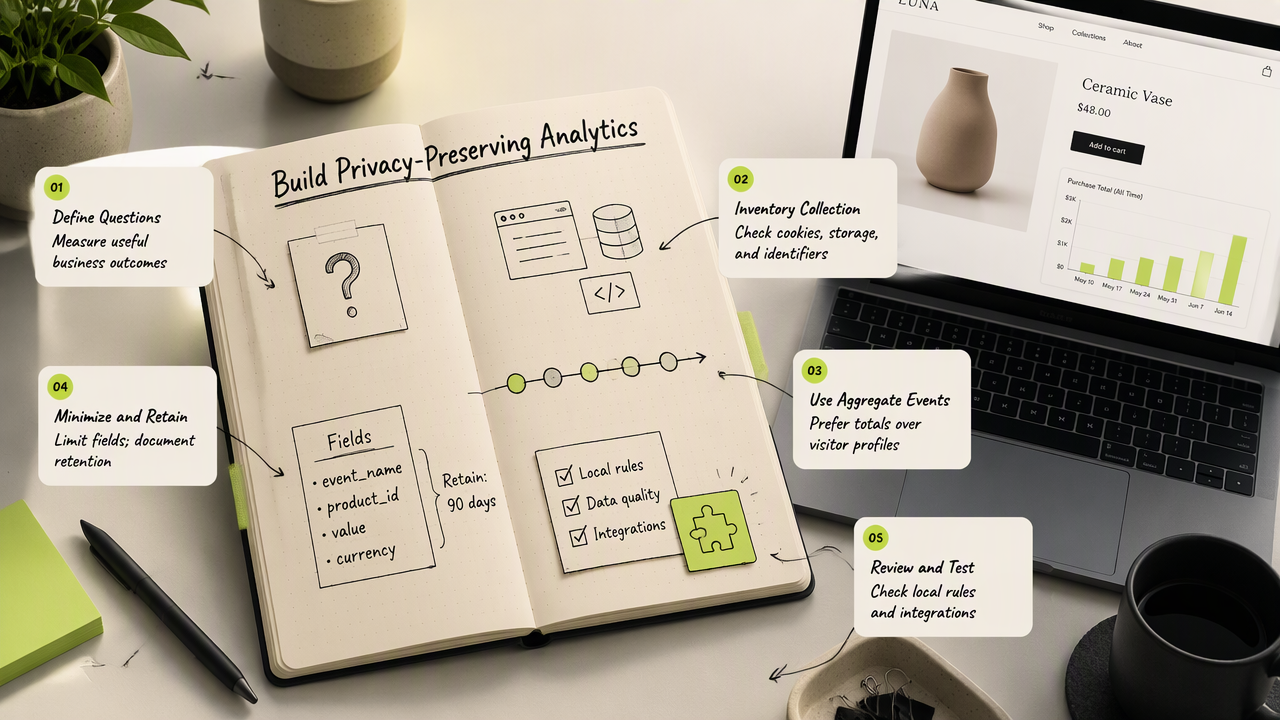
- Inventory cookies, browser storage, scripts, and transmitted identifiers.
- Select aggregate events instead of persistent visitor profiles where possible.
- Minimize collected fields and document retention settings.
- Review jurisdiction-specific requirements before removing consent controls.
- Test the deployed configuration, including third-party integrations.
Match collection to the reporting goal
A narrower measurement plan makes data collection easier to justify and maintain.
For an e-commerce store, product-page views and purchase totals may answer merchandising questions without requiring a complete visitor history. A SaaS team might prioritize signup totals grouped by campaign rather than individual browsing paths.
Privacy-preserving measurement can limit repeat-visitor recognition and cross-device attribution. Those tradeoffs matter when a growth team needs detailed acquisition reporting rather than directional trends.
Research on consent-interface design also deserves attention: the 2021 study by Bongard-Blanchy and colleagues examined dark patterns from the end-user perspective. Its topic supports scrutiny of interface choices, not a blanket claim that analytics can bypass consent.
FAQ: Choosing a banner alternative
Three checks help separate simpler measurement from unsupported compliance assumptions.
Review collection methods, reporting needs, and legal duties separately.
Does cookieless analytics always mean consent-free analytics?
Cookieless analytics doesn't always mean consent-free analytics. Browser storage, fingerprinting, or other device-access methods may still trigger relevant requirements. Personal-data processing also needs separate assessment. The practical test is what the deployed system collects and how it operates, rather than whether its marketing describes it as cookieless.
Can server logs replace marketing analytics?
Server logs can support traffic analysis, but they don't automatically replace marketing analytics. Requests, bots, and caching can complicate interpretation, while campaign attribution needs deliberate configuration. Teams should define which decisions log-derived reports must support, then assess whether the available data is sufficient for those decisions.
Can a site remove its entire consent banner?
A site can remove its entire consent banner only when all relevant technologies support that decision under applicable requirements. Changing analytics doesn't settle the status of advertising or embedded services. A complete script inventory and configuration review should come before removing controls that other site features still need.
Conclusion
Start with a documented inventory and a short list of essential metrics, then select the least intrusive suitable approach. For teams evaluating Faurya, visit faurya.com to review available product information against that checklist and plan a focused implementation assessment.
Generated by EarlySEO.com