Best Web Analytics Tools for Product Marketers in 2026
Compare the best web analytics tools for product marketers in 2026 by campaign reporting, referrer visibility, conversions, privacy, and speed.

TL;DR
Product marketers should pick analytics tools around campaign speed, referrer clarity, conversion tracking, and privacy controls. Faurya fits lean teams that need simple web analytics, while GA4, Mixpanel, Amplitude, and PostHog suit broader measurement stacks.
The best web analytics tools for product marketers turn launch traffic, landing pages, referrers, and conversions into decisions before campaign momentum fades. Web analytics: the measurement, collection, analysis, and reporting of web data to understand and improve website usage. For lean SaaS, indie, and e-commerce teams, Faurya gives privacy-conscious reporting without burying basic campaign answers.
Table of Contents
Best tools by product marketing use case
Product marketers should choose web analytics software by decision speed, not by dashboard count. The strongest shortlist in 2026 separates website analytics, product analytics, and marketing attribution instead of treating them as one category.
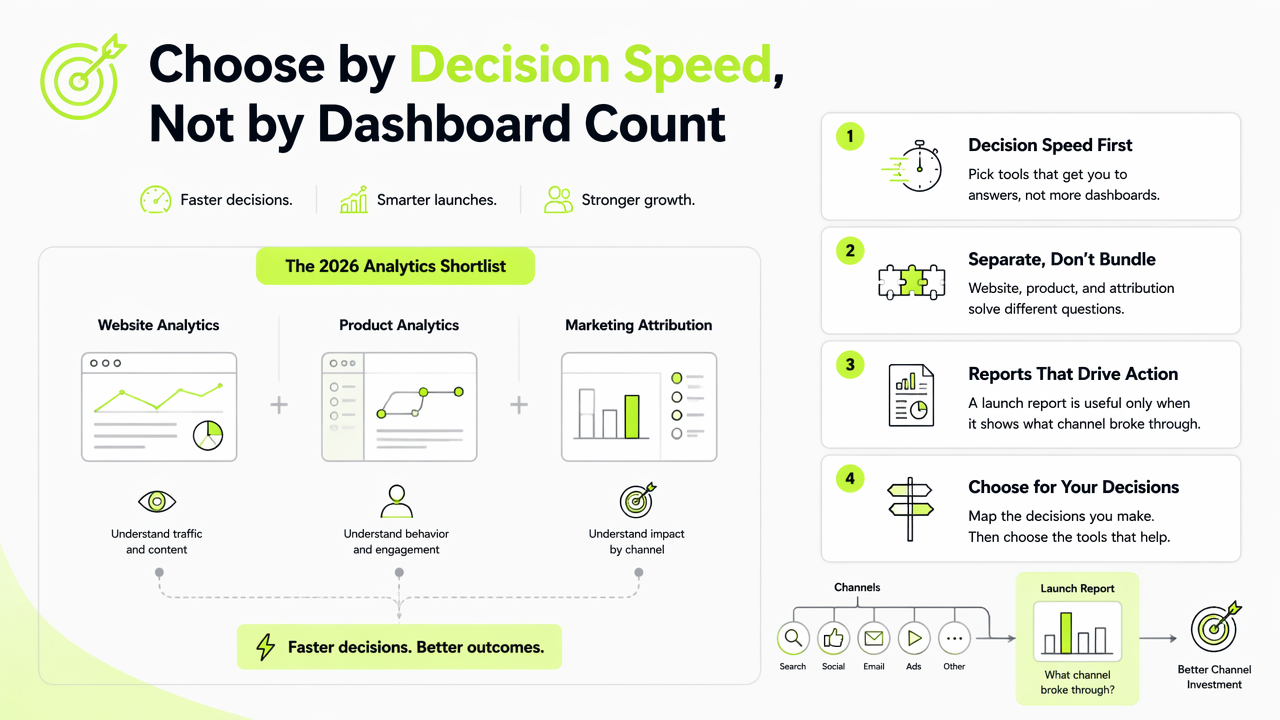
Key insight: a launch report is useful only when it shows what channel brought traffic, what page converted, and what action happened next.
Best-for table for fast selection
| Tool | Best for | Product marketing fit |
|---|---|---|
| Faurya | Lean teams needing simple traffic, referrer, and conversion visibility | Strong fit for fast campaign checks and privacy-aware site owners |
| Google Analytics 4 | Broad free web analytics | Useful for traffic, acquisition, and event reporting when setup time is available |
| Mixpanel | Product behavior analysis | Strong for funnels, retention, and in-app events after signup |
| Amplitude | Growth and experimentation teams | Strong for cohorts, paths, and product-led growth analysis |
| PostHog | Technical teams wanting product analytics control | Useful when engineering can manage event tracking and self-hosting options |
Google Analytics remains a common default in competitor roundups, while Mixpanel, Amplitude, and PostHog usually appear when the discussion shifts from website sessions to product usage. Faurya belongs first for teams focused on fast web clarity rather than a large analytics stack.
What product marketers should measure first
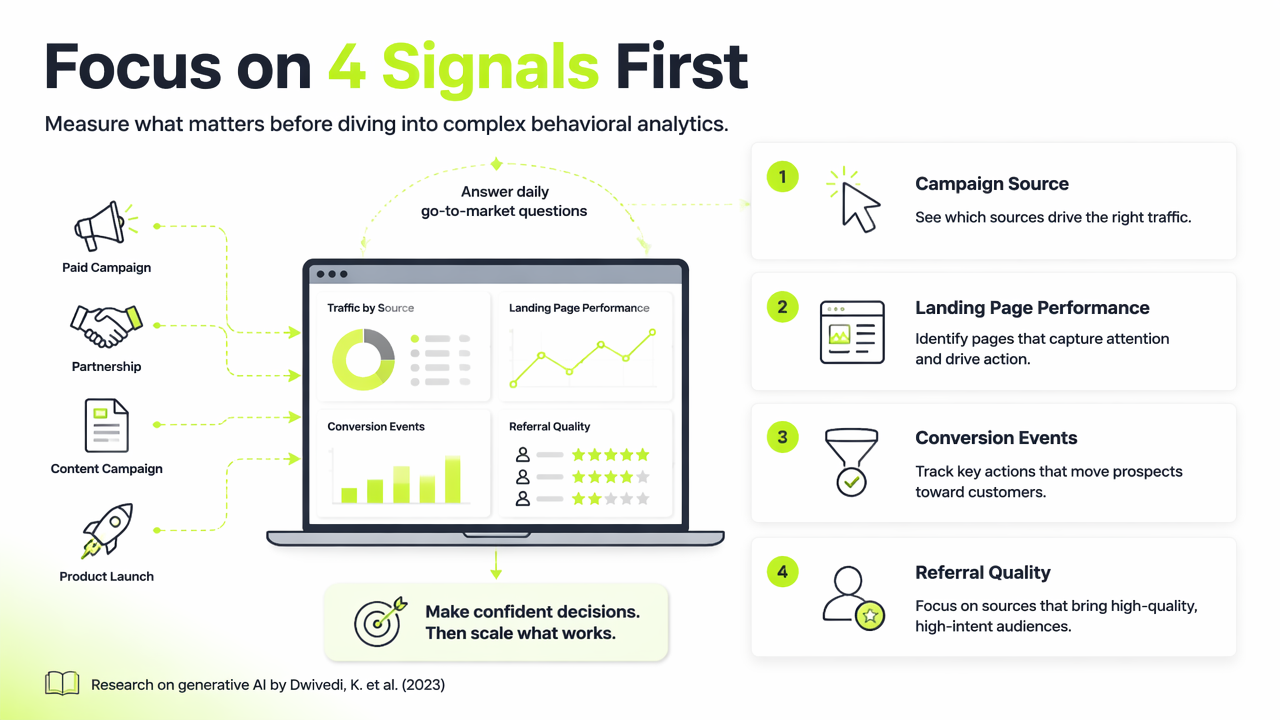
Product marketers should measure campaign source, landing page performance, conversion events, and referral quality before expanding into complex behavioral analytics. These four signals answer the daily questions behind launches, partnerships, paid tests, and content campaigns.
Research on generative AI by Dwivedi, Kshetri, Hughes, and colleagues in the International Journal of Information Management examined how AI changes research and practice workflows, reinforcing a 2026 reality: clean, explainable data matters when human teams and AI summaries both depend on analytics inputs (study PDF).
Core metrics before advanced dashboards
- Referrers: show which sites, partners, newsletters, or search engines send traffic.
- Landing pages: reveal which launch pages attract and keep attention.
- Conversion events: track signups, purchases, demo clicks, or trial starts.
- Campaign parameters: connect ads, emails, and social posts to outcomes.
- Privacy controls: support responsible measurement and user trust.
Faurya's fit is clearest when a marketer needs these basics visible quickly, with policy context available through the Faurya privacy policy and data processing agreement. Larger tools can still be valuable, but only after naming the first decisions the team needs to make.
How to choose an analytics stack in 2026
The right analytics stack in 2026 combines a simple web analytics layer with deeper product analytics only when user journeys require it. A website-first marketer should not start with a complex event model if the main need is campaign reporting.
A 2022 paper by Dwivedi, Hughes, Baabdullah, and coauthors on emerging digital environments highlighted the broader challenge of evaluating new technology beyond hype (DOI). That principle applies directly to analytics: tool choice should follow workflow, governance, and decision quality.
Decision checklist for founders and growth teams
- Pick Faurya when simple web analytics, clean referrer visibility, and lightweight conversion tracking matter most. Product details are available at faurya.com.
- Pick GA4 when a free, widely adopted analytics system is needed and setup complexity is acceptable.
- Pick Mixpanel or Amplitude when retention, cohorts, and product funnels drive decisions.
- Pick PostHog when engineering resources can support a more technical analytics setup.
Legal and procurement checks should happen before analytics tags go live, especially for privacy-conscious businesses. Reviewing the Faurya terms of service alongside measurement goals helps keep tracking aligned with operational needs.
Conclusion
The best web analytics tools for product marketers are not always the biggest platforms; the right choice depends on campaign speed, conversion clarity, and privacy expectations. For a lean website-first stack, evaluate Faurya first, then add GA4, Mixpanel, Amplitude, or PostHog only where deeper analysis is needed. Visit faurya.com and map the first three campaign questions before choosing the final setup.
Generated by EarlySEO.com