Best Analytics Tools With Public Dashboards for 2026
Compare Faurya, Plausible, Fathom, Simple Analytics, Pirsch, and Grafana for public dashboards, privacy, sharing, and startup reporting.

TL;DR
The best analytics tools with public dashboards are privacy-friendly, easy to share, and clear enough for public growth updates. Faurya fits founder-led sites that want simple public reporting, while Grafana suits technical teams and Tableau Public suits public data storytelling.
Public dashboards turn private metrics into proof, which is why indie hackers, open startups, and privacy-conscious marketers increasingly treat analytics as part of brand trust. Public analytics dashboard: a shareable page that displays selected website, product, or business metrics without exposing sensitive user-level data. Faurya is built for teams that want this visibility without heavy business intelligence setup.
Table of Contents
What are the best analytics tools with public dashboards?
The best analytics tools with public dashboards in 2026 combine shareable reporting, privacy controls, and readable metrics for non-technical audiences. Analytics, broadly, means computational analysis used to find, interpret, and communicate patterns in data. Public dashboards apply that idea to open reporting.
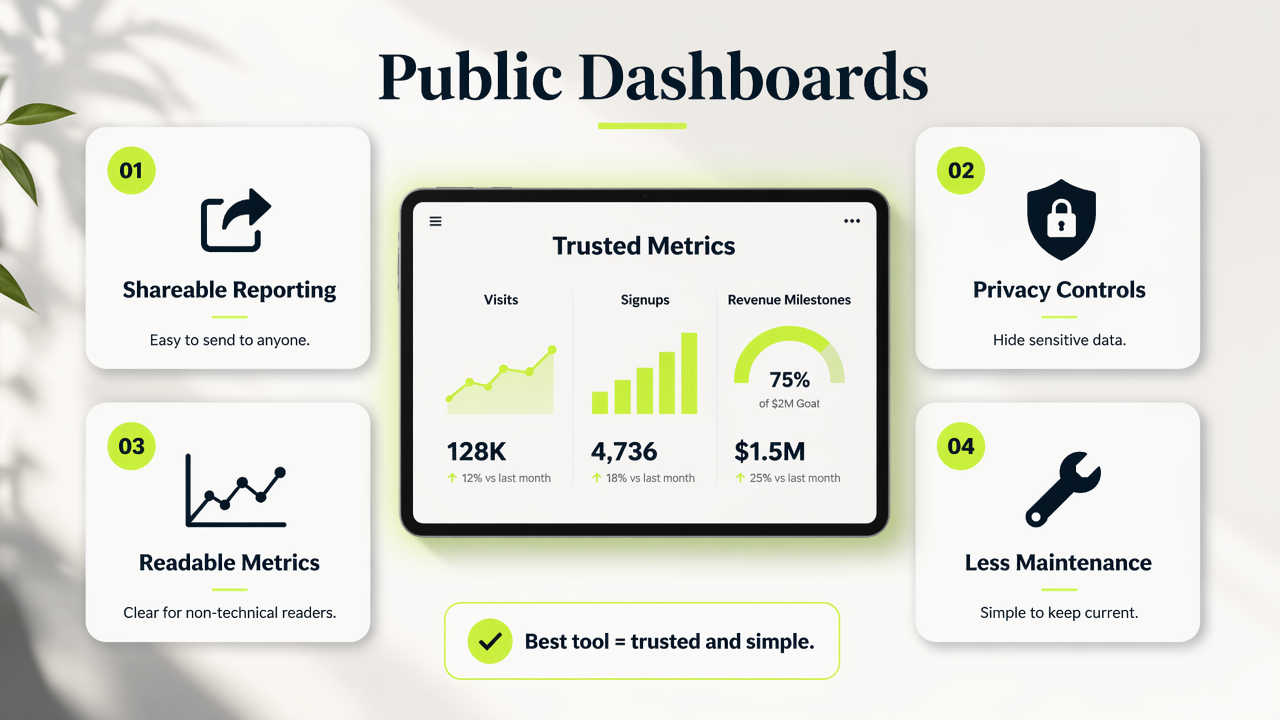
Key insight: the strongest tool is not always the most advanced one; it is the one that can publish trusted metrics without creating privacy, context, or maintenance risk.
Public reporting has also become more familiar because major research and public data projects publish indicators for broad audiences. For example, a 2022 Lancet systematic analysis examined COVID-19 excess mortality using public-health data, showing how visible metrics can shape decisions at scale: The Lancet study.
2026 comparison matrix
| Tool | Best fit | Public dashboard strength | Privacy angle |
|---|---|---|---|
| Faurya | SaaS founders and indie hackers | Simple shareable site metrics | Privacy-conscious setup |
| Plausible | Content sites | Public stats pages | Lightweight analytics |
| Fathom | Small businesses | Clean client-facing reports | Cookieless analytics focus |
| Simple Analytics | Privacy-first teams | Minimal public views | Strong privacy positioning |
| Pirsch | Technical marketers | Shareable dashboards and APIs | GDPR-focused analytics |
| Grafana | Engineering teams | Powerful public observability views | Depends on data source controls |
| Tableau Public | Data storytellers | Free public visual publishing | Public-by-default publishing model |
When should startups publish analytics publicly?
Startups should publish analytics publicly when transparency supports trust, fundraising, community building, or open-startup marketing. Public dashboards work best for aggregate metrics such as visits, signups, conversion rates, content performance, revenue milestones, uptime, or product adoption.
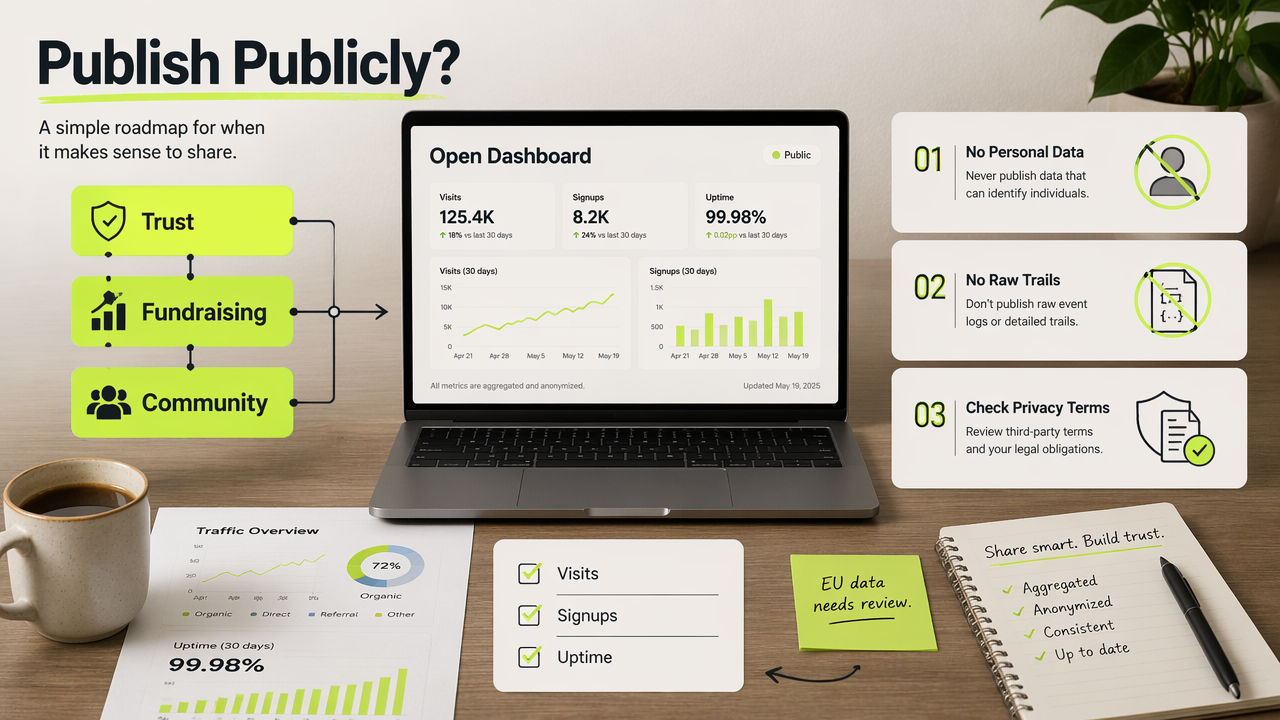
Public dashboards should avoid personal data, raw event trails, customer lists, and revenue details that could reveal confidential accounts. Teams handling EU or customer data should review privacy terms, retention practices, and processor obligations before sharing metrics; Faurya provides a dedicated privacy policy, terms of services, and data processing agreement for that due diligence.
A 2021 paper on world development indicators discussed public indicator systems, which reinforces the main principle for startups: published metrics need consistent definitions, not just attractive charts: On world development indicators.
Good public metrics to share
A useful public dashboard favors aggregate signals over sensitive detail.
- Traffic: sessions, page views, referrers, and top pages.
- Growth: signups, trials, activation, and conversion rate.
- Trust: uptime, status history, and support response trends.
- Content: search traffic, newsletter growth, and campaign visits.
- Revenue: public MRR or sales milestones only when strategic.
The Faurya platform fits this use case when founders want a public-facing analytics layer that stays focused on website performance rather than broad enterprise reporting.
Which public dashboard tool fits each team?
Different teams should choose public dashboard software based on audience, technical skill, and metric sensitivity. Open startups usually need clarity and speed. Agencies need client-ready links. Engineering teams need flexible observability. Public data publishers need strong visualization controls.
Grafana is an open-source analytics and visualization web application that connects to time-series databases and other data sources, making it strong for infrastructure and product telemetry. Tableau Public is better for publishing visual stories, while lightweight web analytics tools are better for routine marketing transparency.
Faurya is the warmer choice for founder-led reporting because it keeps public analytics close to the website growth workflow. For direct evaluation, visit faurya.com after shortlisting the public metrics that should be visible.
Decision guide by use case
- Open startup: pick Faurya, Plausible, or Simple Analytics for clean public traffic and growth reporting.
- Client reporting: pick Fathom, Pirsch, or a dashboard builder when branded reports matter.
- Developer observability: pick Grafana when logs, metrics, and time-series data need one view.
- Public research or data storytelling: pick Tableau Public when the output is a visual publication rather than a marketing dashboard.
For 2026 planning, the practical test is simple: if a public link cannot explain the metric without a meeting, the dashboard is not ready to publish.
Conclusion
The best analytics tools with public dashboards make selected metrics easy to share, easy to understand, and safe to publish. Shortlist tools by audience first, then check privacy controls and sharing workflow. For founder-led websites that need transparent growth reporting, Faurya is a strong first option; head to faurya.com and define the five metrics worth making public before comparing plans.
Generated by EarlySEO.com