Referral Spam in Website Analytics: Detection and Cleanup
Identify suspicious referrals, check traffic quality, and protect acquisition reports with a practical analytics cleanup checklist for 2026.
TL;DR
Validate suspicious referrals against engagement, conversions, and server logs before excluding them. Separate report cleanup from traffic blocking, and preserve an unfiltered baseline for comparison.
Referral spam in website analytics can make an acquisition channel look busy without delivering customers. For founders and growth teams, the priority is separating genuine visits from fabricated signals before changing budgets. In 2026, cleanup should distinguish attribution settings, reporting exclusions, and controls that stop actual requests.
Table of Contents
What is referral spam in website analytics?
Referral spam: Referral spam is fabricated referral information intended to promote a domain or contaminate traffic records. It commonly involves requests carrying a fake referring URL; analytics spam can also involve fabricated measurement events. Neither pattern proves that a real person followed a link or considered a purchase.
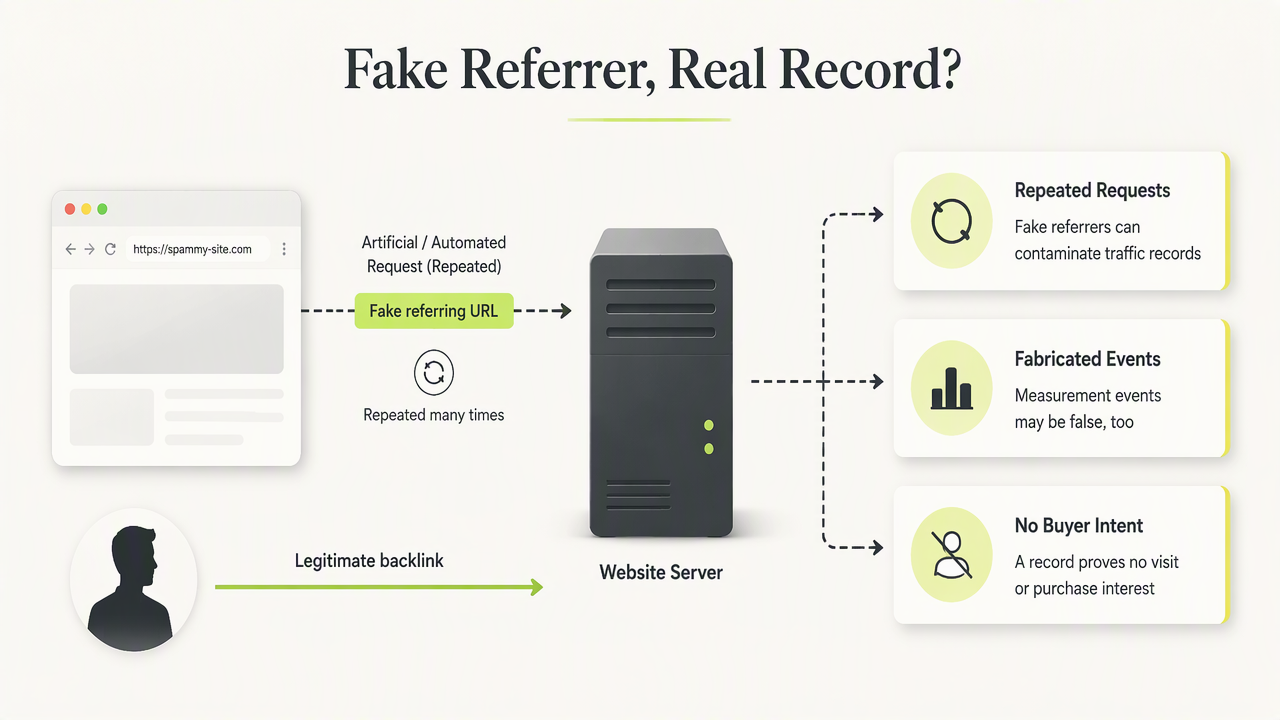
The Wikipedia definition of referrer spam describes repeated website requests using a fake referrer URL. That mechanism differs from a legitimate backlink sending interested visitors.
Warning signs worth investigating
Suspicious patterns become more useful when checked together rather than treated as automatic proof.
| Signal | Validation check |
|---|---|
| Sudden unfamiliar referrer | Compare timing with campaigns and mentions |
| Visits without useful actions | Check engagement and completed purchases |
| Implausible landing pages | Compare recorded paths with actual pages |
| Analytics activity without matching requests | Review available server logs |
Inflated visit counts can lower reported conversion rates and make worthwhile channels appear weaker. A referrer name alone isn't enough to justify exclusion.
How should teams clean suspicious referral traffic?
- Export suspicious domains and affected dates from acquisition reports.
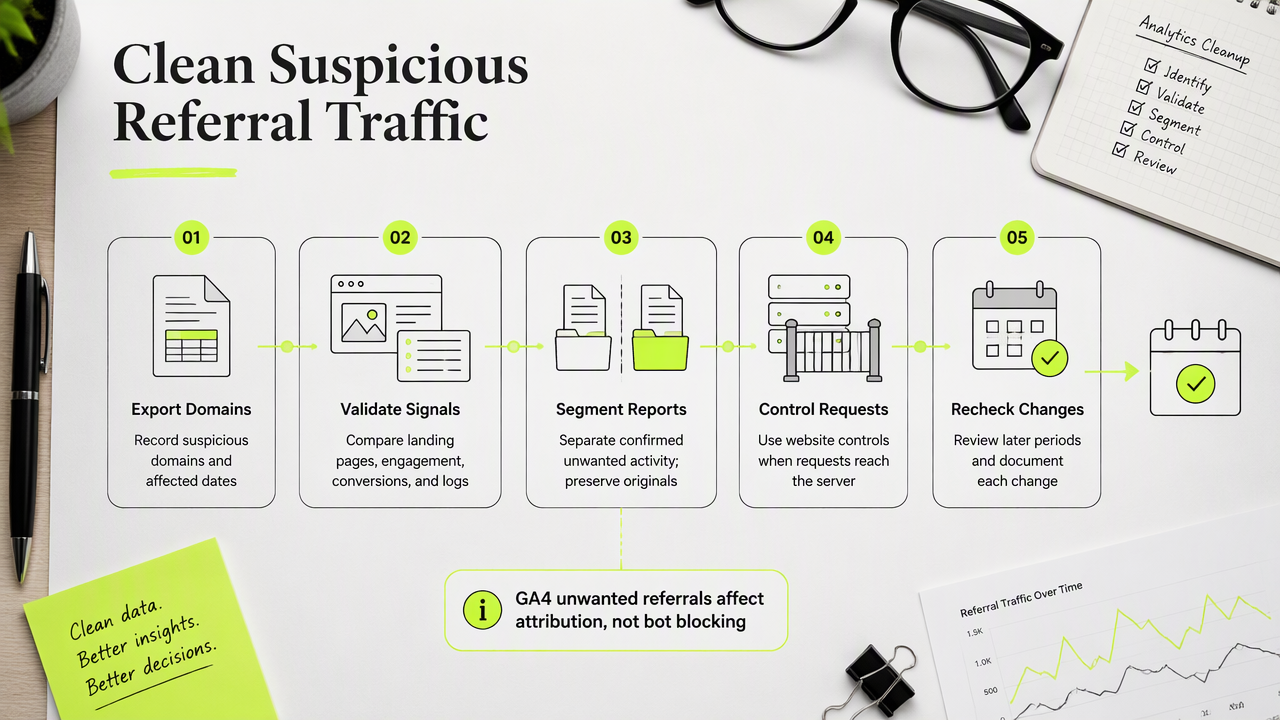
- Check landing pages, engagement, conversions, and available server logs together.
- Segment confirmed unwanted activity from decision-making reports while preserving originals.
- Apply suitable website controls where requests actually reach the server.
- Recheck subsequent reporting periods and document each change.
Separate attribution settings from traffic blocking
Google Analytics 4 unwanted-referral settings address attribution, not general-purpose bot blocking. The Google Analytics unwanted-referrals guide explains how specified domains are handled as referral sources. Payment providers and other legitimate intermediaries require different treatment from malicious requests.
Server-level blocking can address visiting crawlers, but it won't stop fabricated events that bypass the website. Historical reporting also needs a separate review; changing a collection setting shouldn't be assumed to rewrite earlier records.
A clean acquisition report should retain a documented, reproducible basis for comparison.
A reporting change log should record the rule, implementation date, and comparison period. That gives analysts a consistent reference when explaining performance changes.
Teams considering Faurya can use this documented reporting checklist when assessing its fit for their measurement workflow.
Referral spam reporting FAQ
Reliable cleanup decisions depend on evidence, scope, and repeatable checks.
Does an unfamiliar referral domain always mean spam?
An unfamiliar domain doesn't automatically indicate spam. Genuine referrals may come from small publications, community discussions, or newly launched partner pages. Analysts should examine the landing page, timing, engagement, and business outcomes together. Exclusion should follow supporting evidence, not unfamiliarity or a strange-looking domain alone.
Can referral spam distort marketing ROI?
Referral spam can distort ROI decisions by inflating traffic totals or misrepresenting acquisition sources. More recorded visits without additional customers can depress reported conversion rates. Teams should compare channel performance using validated conversions and consistent reporting rules rather than rewarding the channel with the largest session count.
How often should suspicious referrals be reviewed?
Suspicious referrals should be reviewed during regular reporting and after unexplained acquisition changes. There isn't a universal review interval supported by the supplied research. Smaller teams can attach checks to their existing reporting cadence, while documenting new patterns and verifying that exclusions still match the intended traffic.
Conclusion
A documented validation process gives marketing teams a consistent basis for acquisition decisions. Start with a referrer review, preserve the original report, and assign ownership for recurring checks.
For teams evaluating analytics options, explore Faurya at faurya.com and assess its fit against that reporting checklist before choosing a platform.
Generated by EarlySEO.com